The Noorani Rule for Children | Learn Correct Reading with Fasiḥ
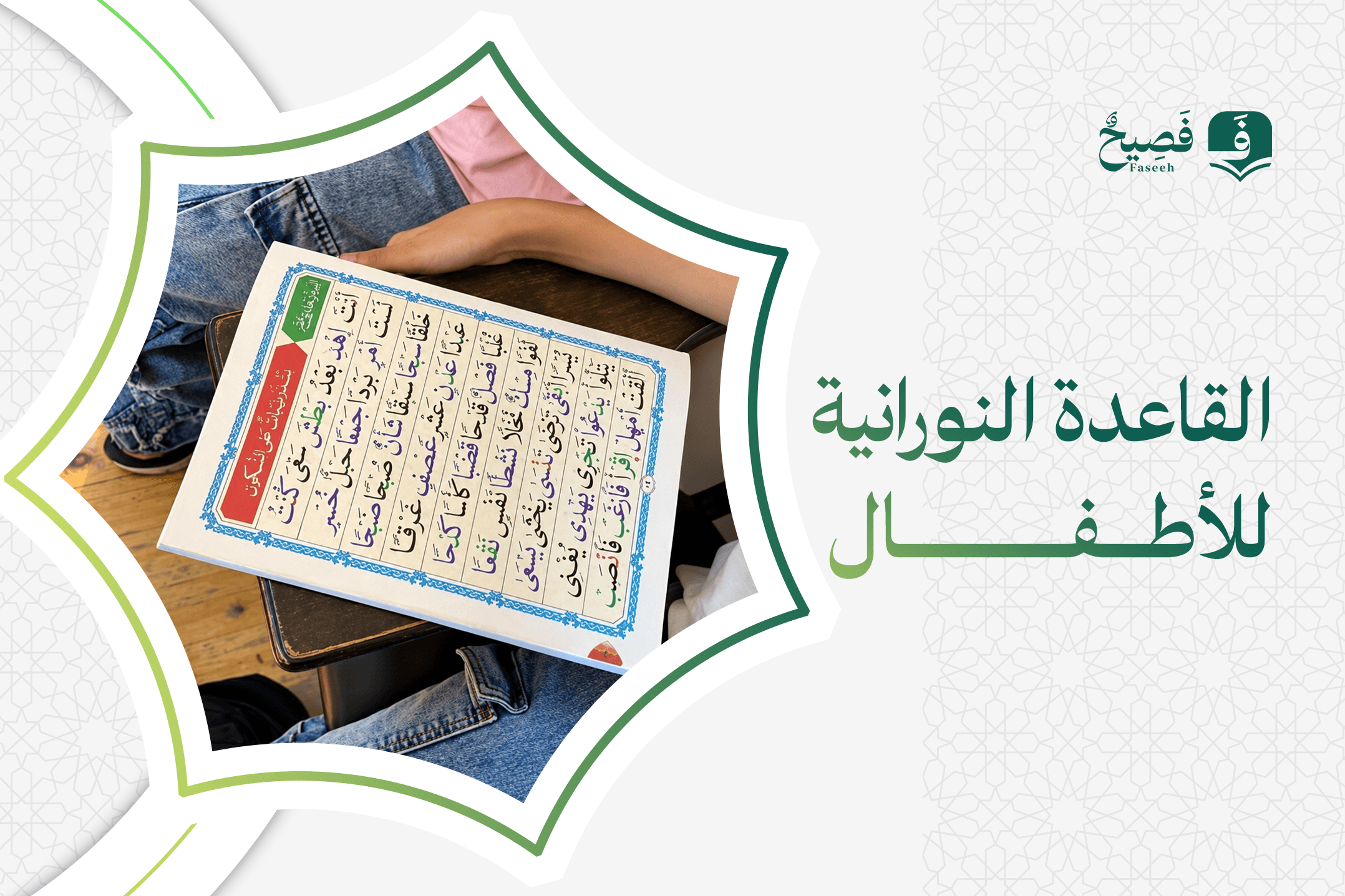
A child’s journey toward correct reading begins with understanding the letter and its sound, not just memorizing its shape. Therefore, many parents search for Noorani Qaida for children as a structured method that helps beginners move from recognizing Arabic letters to reading syllables and words more clearly.
The Noorani Qaida focuses on teaching Arabic letters, vowel marks, tanween, elongation rules, sukoon, and shaddah, while emphasizing correct pronunciation. This helps children build a strong foundation before progressing to Quran reading and learning Tajweed rules.
Through Faseeh Educational Platform, learners can start from the appropriate level through structured learning paths that help develop letter recognition, spelling, pronunciation, and reading skills gradually.
What is Noorani Qaida for Children?
Noorani Qaida is a step-by-step educational method used to train beginners in Arabic reading, with a focus on letter sounds and correct pronunciation.
Children begin by learning individual Arabic letters, then move to recognizing letters within words, basic vowel marks, tanween, elongation, sukoon, and shaddah, until they can read syllables and complete words.
The goal of Noorani Qaida is not only to memorize letter names but also to teach children how to read letters when their sounds or positions change.
For example, knowing the letter Baa (ب) does not necessarily mean the child can read:
بَ – بِ – بُ
The child also needs to understand the difference between short vowels and long vowels, such as:
بَ – بَا
This highlights the importance of gradual learning and continuous practice.
Benefits of Noorani Qaida for Children
A child may memorize the names of Arabic letters but still struggle to read new words because reading requires connected visual and phonetic skills.
Noorani Qaida helps children to:
- Recognize Arabic letters and distinguish their shapes.
- Connect letter shapes with their sounds.
- Differentiate between similar-looking letters.
- Read letters with Fatha, Kasra, and Damma.
- Understand Tanween, Madd, Sukoon, and Shaddah.
- Improve spelling and word formation skills.
- Train the tongue for correct pronunciation.
- Move from letters to syllables and then words.
- Prepare for better Quran reading.
Therefore, Noorani Qaida is considered a foundation stage, not a separate final goal unrelated to reading skills.
To strengthen children’s early reading abilities, you can explore Teaching Arabic Alphabet to Children to understand effective methods for introducing letters and sounds.
What Does a Child Learn Through Noorani Qaida?
Arabic Alphabet Letters
Children begin by learning the shape, name, and sound of each letter while practicing how to distinguish between similar letters, such as:
ب – ت – ث
ج – ح – خ
س – ش
ص – ض
After that, they learn how the shape of a letter changes when it appears at the beginning, middle, or end of a word.
Basic Vowel Marks
Children learn Fatha, Kasra, and Damma and understand that vowel marks change the sound of the letter, such as:
كَ – كِ – كُ
At this stage, the child moves from simply memorizing letters to actual phonetic reading.
Tanween and Long Vowels
After mastering the basic vowel marks, children learn the three types of Tanween (double vowel endings), then move on to distinguishing between short vowels and long vowel sounds:
بَ – بَا
بِ – بِي
بُ – بُو
Sukoon and Shaddah
Children learn that a letter with Sukoon does not carry an independent vowel sound and that its pronunciation is connected to the letter before it.
They also practice reading letters with Shaddah correctly without removing part of the sound or adding an incorrect vowel.
Reading Words
After mastering the previous skills, children begin combining sounds and reading complete words.
The success of the foundation stage appears when a child can read a new word independently, not only repeat words they have memorized.
You can explore Faseeh Educational Foundation Program | Reading and Spelling Foundation Path to choose the suitable learning path for developing children’s reading skills.
What is the Appropriate Age to Start?
There is no single age that suits every child. The most important factor is the child’s readiness to learn.
A child can start when they are able to:
- Focus for a short period.
- Recognize different shapes.
- Listen and imitate sounds.
- Follow simple instructions.
- Remember some letters after repetition.
Some children may start before school, while others need more time.
Lessons should be short and interactive to prevent boredom or pressure.
The Best Way to Teach Noorani Qaida
Providing Short and Regular Lessons
Short and repeated practice is more effective than long lessons filled with information.
Consistency helps children maintain their skills and prevents forgetting previous lessons.
Listening and Imitation
The child listens to the correct pronunciation, then imitates and repeats the sound independently.
This method is especially useful for letters that require attention to their articulation points.
Avoiding Moving Too Quickly
A child should not move to a new skill before mastering the current one without continuous assistance.
Reviewing and Providing New Examples
Each lesson should include a review of previous skills.
It is also recommended to introduce new words that the child has not studied before, to ensure true understanding rather than memorization.
The Relationship Between Noorani Qaida, Pronunciation, and Tajweed
Correct reading depends on pronouncing letters from their proper articulation points. Therefore, children need to distinguish between sounds such as:
س – ص
ت – ط
د – ض
ق – ك
Learning about Points of Articulation in Tajweed helps children understand how sounds are produced and correct pronunciation mistakes early.
Noorani Qaida builds an important foundation before studying Tajweed. After mastering reading basics, children can gradually move to Teaching Tajweed for Beginners.
Is Noorani Qaida Suitable for Non-Arabic Speakers?
Yes, Noorani Qaida can be used for children who are non-native Arabic speakers because it follows a clear learning sequence:
Letter → Sound → Vowel → Syllable → Word
Non-Arabic speaking children may need additional repetition and more practice with sounds that do not exist in their native language.
You can also learn more through Teaching Reading to Non-Arabic Speakers to build Arabic reading skills through an organized approach.
Can Noorani Qaida Be Learned Online?
Noorani Qaida can be taught online when lessons are interactive and the teacher can listen to the child and correct pronunciation directly.
Individual lessons help identify mistakes in letters, vowel sounds, and pronunciation and provide continuous correction.
Effective learning depends on listening, practice, and guidance, not only on recorded lessons.
Start Building Your Child’s Foundation with Faseeh
Noorani Qaida for Children helps develop reading skills gradually, starting from letters and their sounds, moving through vowels and elongations, and reaching independent word reading.
Through Faseeh Educational Foundation Program | Reading and Spelling Foundation Path, children can follow an organized learning path that improves spelling, reading, and pronunciation under the supervision of specialists.
To discover the most suitable program for your child, explore Faseeh Packages and Prices and choose the educational path that fits your needs.