Teaching reading to non-Arabic speakers | Faseeh Platform
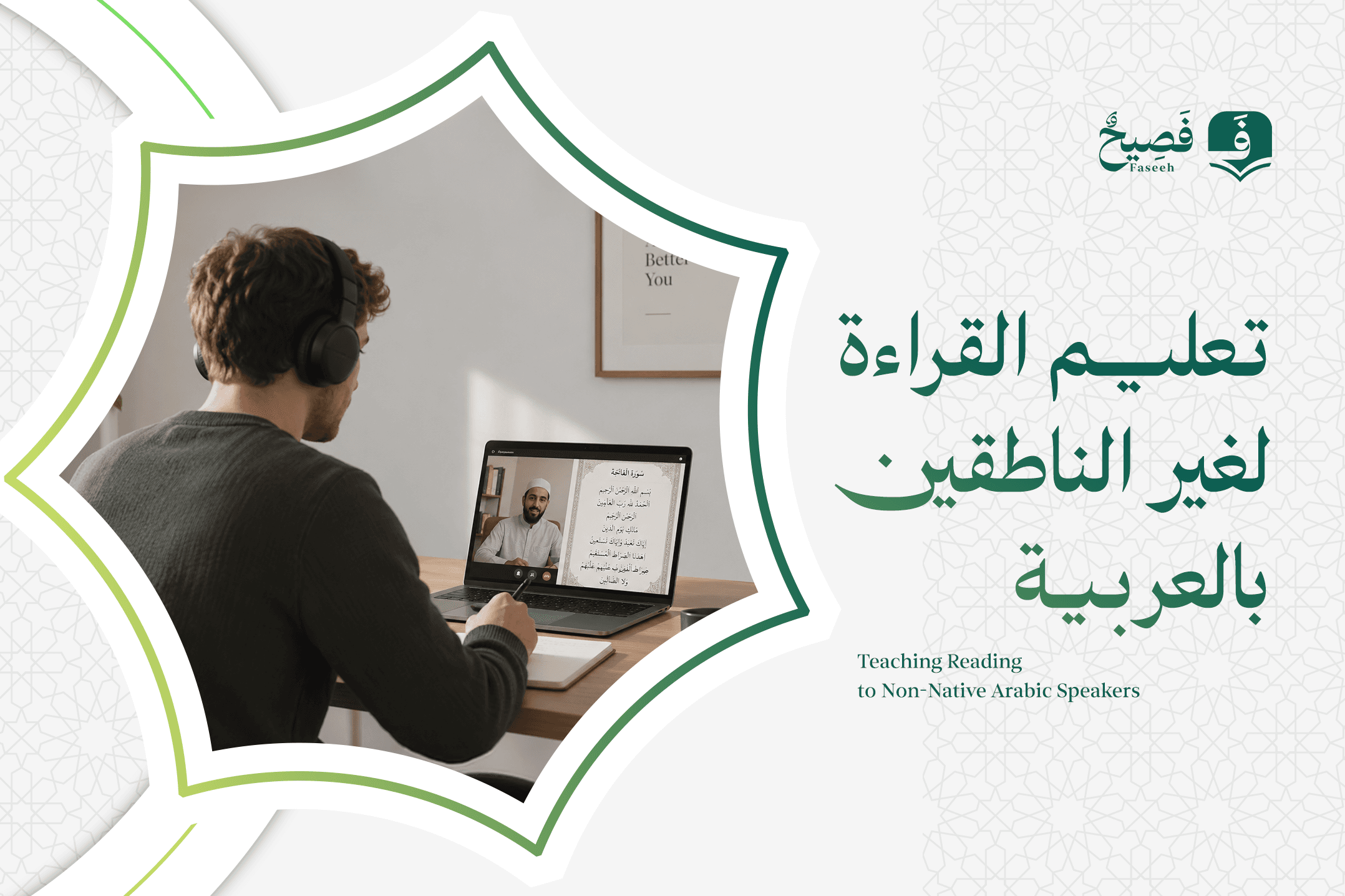
Teaching reading to non-Arabic speakers is an essential step for acquiring the Arabic language. Reading helps learners understand words and sentences while improving pronunciation, listening, and writing skills in an integrated way.
Learning Arabic reading is not limited to memorizing the shapes of letters; rather, it requires a gradual learning approach that starts with recognizing letters and their sounds, then learning vowels and spelling, until reaching the ability to read words, sentences, and texts fluently and with understanding.
Through Faseeh Educational Platform, learners can start from the appropriate level and follow structured learning paths that help them build letter recognition, spelling, and pronunciation skills, then gradually progress toward confident reading.
Importance of Teaching Reading to Non-Arabic Speakers
Reading helps learners understand how words are formed and recognize vocabulary used in different situations. It is also an essential foundation for developing other Arabic language skills.
The main benefits of learning reading include:
- Correctly recognizing Arabic letters and their sounds.
- Improving pronunciation and articulation of letters.
- Expanding vocabulary.
- Developing spelling and word formation skills.
- Understanding written sentences and texts.
- Supporting writing, listening, and speaking skills.
- Preparing learners to move to more advanced levels.
Therefore, teaching reading should depend on gradual progression and practical application, not just memorizing letter names.
You can also learn more about choosing the right educational program through the article A Platform for Teaching Arabic Language, which explains the important factors for building an organized learning journey.
Main Challenges Facing Arabic Learners
Non-Arabic speakers may face several challenges at the beginning of their learning journey, such as reading from right to left and understanding how letters change shape depending on their position in the word.
Arabic also contains letters that look similar, such as:
ب – ت – ث
ج – ح – خ
س – ش
ص – ض
Learners need visual and audio exercises to distinguish between these letters.
Arabic also includes sounds that may not exist in the learner’s native language, such as:
ع، ح، خ، غ، ق، ض، ط، ظ
Learning these sounds requires listening to correct pronunciation, practicing imitation, and receiving continuous correction.
Another important challenge is learning Arabic vowels and pronunciation marks, including:
- Fatha.
- Damma.
- Kasra.
- Sukoon.
- Shadda.
- Tanween.
- Long vowels.
These marks directly affect the pronunciation and meaning of words.
Stages of Teaching Reading to Non-Arabic Speakers
1. Learning Arabic Letters and Their Sounds
The learning journey begins by recognizing the shape of each letter, its name, sound, and pronunciation method, while practicing its different forms inside words.
It is recommended to introduce letters in small groups and use pictures and simple words to help learners connect the letter shape with its sound.
2. Learning Short Vowels
After mastering letters, learners move to learning the basic Arabic vowels:
- Fatha: بَ – تَ – مَ
- Damma: بُ – تُ – مُ
- Kasra: بِ – تِ – مِ
Practicing different vowels helps learners improve reading accuracy and understand sound differences.
3. Learning Spelling and Combining Sounds
Spelling is one of the most important stages because it moves learners from reading individual letters to forming complete words.
Example:
كَ + تَ + بَ = كَتَبَ
Training starts with short syllables, then simple words, before moving to longer words.
Learners can benefit from Faseeh Foundation Program - Reading and Spelling Track, which helps build a strong foundation in letters and reading through a structured approach.
4. Learning Sukoon, Shadda, Tanween, and Long Vowels
After mastering short vowels, learners begin studying:
- Sukoon.
- Shadda.
- Tanween.
- Long vowels using Alif, Waw, and Ya.
Each skill should be introduced gradually with clear examples and practical exercises.
5. Reading Words and Sentences
After building a strong foundation, learners begin reading simple words such as:
House, door, pen, book, school.
Then they move to short sentences such as:
هذا كتاب.
The boy drinks water.
Maryam went to school.
This gradual progression helps improve reading speed and connect words within meaningful contexts.
6. Reading and Understanding Texts
After mastering sentence reading, learners begin reading short texts and stories suitable for their level.
This stage should combine:
- Correct pronunciation.
- Reading fluency.
- Understanding meaning.
Simple questions can be asked after reading to ensure comprehension.
Best Methods for Teaching Arabic Reading
Combining Audio and Visual Learning
Combining seeing the letter, hearing its sound, and connecting it with an image helps learners memorize information more effectively, such as:
ب – باب
ت – تمر
ق – قلم
This approach helps learners connect the shape of the letter, its pronunciation, and its meaning at the same time.
Moving from Easy to Difficult
The best learning sequence for Arabic reading is:
Letter → Sound → Syllable → Word → Sentence → Text
This gradual method helps learners master each skill before moving to the next stage and prevents confusion or difficulty during learning.
Reading Aloud
Reading aloud helps learners:
- Improve pronunciation.
- Increase confidence.
- Identify mistakes.
- Receive direct correction.
Understanding Arabic Letter Articulation Points in Tajweed is also important for improving Arabic pronunciation, especially for sounds that are unfamiliar to non-Arabic speakers.
Regular Practice
Short daily practice sessions are usually more effective than intensive study followed by long breaks.
Learners are encouraged to dedicate daily time to reviewing letters, words, and sentences.
The goal should not be finishing lessons quickly, but rather mastering skills and applying them correctly.
Teaching Reading to Children and Adults
Children need interactive teaching methods that rely on:
- Pictures.
- Flashcards.
- Educational games.
- Stories.
Lessons should be short, engaging, and varied, while encouraging children and avoiding excessive focus on mistakes.
Adults, on the other hand, benefit from understanding the rules and how to apply them. They can practice daily vocabulary, signs, instructions, and sentences used in study or work environments while maintaining a gradual learning approach.
Can Arabic Reading Be Learned Online?
Teaching reading to non-Arabic speakers online has become a suitable option for learners worldwide because it provides:
- Flexible schedules.
- Live lessons.
- Digital exercises.
- Continuous follow-up.
Online learning becomes more effective when it combines:
- A clear educational curriculum.
- Qualified teachers.
- Practical application.
- Direct pronunciation correction.
Common Mistakes to Avoid
Some mistakes may slow down the learner’s progress, including:
- Memorizing letter names without using them in words.
- Moving to difficult texts too early.
- Ignoring pronunciation correction from the beginning.
- Introducing too many skills in one lesson.
- Separating reading from understanding meaning.
- Depending only on applications without teacher supervision.
Start Learning Arabic Reading with Faseeh
Teaching reading to non-Arabic speakers is a gradual journey that starts with letters and sounds, then moves to vowels and spelling, and finally reaches fluent reading of sentences and texts with understanding.
Through Faseeh Educational Platform, learners can benefit from structured educational programs that help improve reading and pronunciation step by step under the supervision of specialized teachers.
To explore available programs and choose the suitable learning path, you can check Faseeh Packages and Prices and select the option that matches your educational goals.