The status of the Arabic language among languages: the identity of a nation and a treasure of civilization.
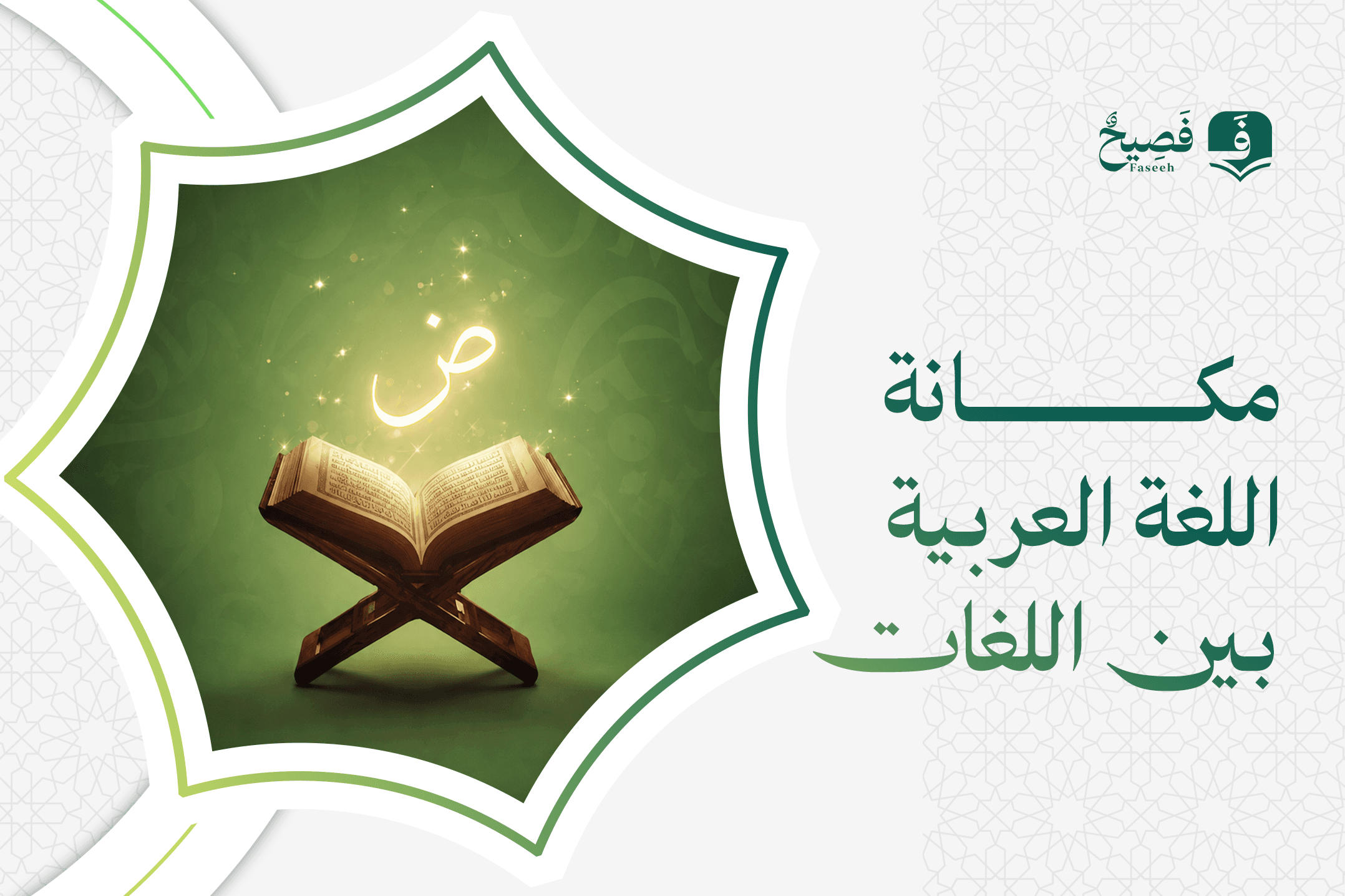
The status of the Arabic language among languages is a central issue that reflects the depth of Arab and Islamic civilization. It is not merely a means of communication, but a comprehensive linguistic system that carries within it the history of a nation, the thought of a civilization, and an identity deeply rooted through the ages. The Arabic language is distinguished by its unique ability for precise expression and its immense linguistic richness, making it one of the most influential and enduring languages in the world.
With the rapid development of learning methods, it has become essential to present the Arabic language in a modern way that meets the needs of the new generation, without compromising its authenticity. This is where the role of the Faseeh Arabic Language Learning Platform comes in, which aims to simplify the learning of Arabic from the ground up and assist children and beginners in understanding and mastering it through interactive methods that combine depth and simplicity, making the language closer and easier to understand and apply.
Is Arabic merely a means of communication or a cultural identity?
The Arabic language is not just a tool for expression; it is:
- The identity of a nation
- A record of civilization
- A means of conveying thought and knowledge
Its importance increased with the revelation of the Holy Quran in it, becoming:
- The language of the Islamic religion
- The language for preserving and reciting the Holy Quran and understanding its meanings
- The language of science during the ages of prosperity
- The language of culture and literature
How has the status of the Arabic language evolved throughout history?
The Arabic language belongs to the Semitic languages and reached its peak of glory with the advent of Islam.
During the Islamic eras:
- It became the language of science and knowledge
- Sciences and philosophy were translated into it
- It spread across vast regions of the world
Despite the passage of centuries, it has maintained:
- Its authenticity
- Its linguistic structure
- Its ability to express
What is the status of the Arabic language among languages globally today?
The Arabic language occupies a prominent position among languages globally, as:
- It is the official language in more than 22 countries
- Over 400 million people speak it
- It is one of the official languages of the United Nations
This reflects its significant cultural and civilizational impact.
What distinguishes the Arabic language from other languages?
The strength of Arabic lies in several characteristics:
- Abundance of vocabulary
- The derivational system
- Precision in expression
- Eloquence and rhetoric
These factors make it a language capable of expressing the most nuanced meanings and profound ideas.
What challenges does the Arabic language face today?
Despite its status, the Arabic language faces:
- A decline in its use in education
- The dominance of foreign languages
- Weak use of Modern Standard Arabic
- A lack of deep interest in it
How can the status of the Arabic language among languages be preserved?
To maintain this status, it is necessary to:
- Develop language teaching methods
- Use modern teaching tools
- Encourage new generations
Here, the role of modern educational platforms such as the Faseeh Arabic Language Learning Platform becomes evident, providing effective and interactive solutions for learning Arabic.
What is the role of learning spelling and Tajweed in mastering the Arabic language?
Learning the basics is one of the most important steps in mastering the language, as it helps:
- Spelling lessons build a strong linguistic foundation
- Teaching spelling improves pronunciation
- The articulation points in Tajweed regulate pronunciation
- Learning Tajweed enhances recitation and understanding
This integration is what distinguishes correct systematic learning through the Arabic Reading and Spelling Foundation Path.
How does the Faseeh platform help you learn Arabic easily?
At Faseeh, we offer a comprehensive educational experience that helps you master the language step by step through:
- Learning letters from scratch
- Improving reading and writing
- Developing correct pronunciation
- Building a strong vocabulary
You can also improve your reading skills through Teaching Reading to Non-Arabic Speakers.
Is Arabic an ancient language or capable of keeping pace with the times?
Despite its rich history, the Arabic language remains:
- A living language
- Capable of evolution
- Able to keep pace with the times
However, this requires modern teaching methods, which Fasih provides.
Conclusion
The status of the Arabic language among languages represents a deep civilizational and cultural value; it is not just a language, but a comprehensive identity that reflects the history of a nation and its consciousness through the ages. Preserving it is no longer an option but a necessity imposed by the demands of the present and future.
With the evolution of learning methods, learning Arabic has become easier and more flexible, especially with the existence of specialized educational platforms like Fasih, which offer a simplified educational experience that helps in gradually and effectively mastering the language.
Do not postpone this important step… Start your journey today, and give yourself or your child a real opportunity to acquire Arabic language skills with confidence and clarity.
Join Fasih now and take the first step by exploring Faseeh Plans and Pricing and choosing the option that suits your learning needs.