Iqlab in Tajweed: Its One Letter and How to Pronounce It
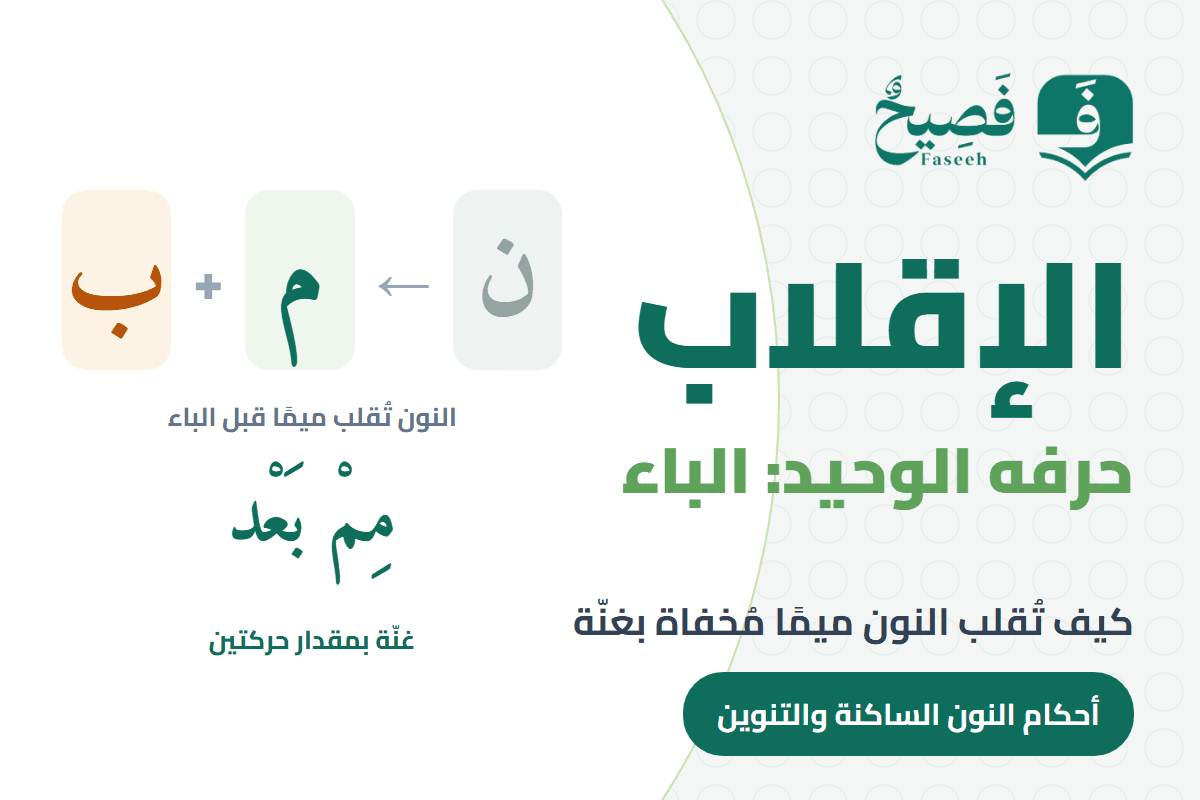
Iqlab (الإقلاب) is the third rule of Noon Sakinah and Tanween, and the easiest one to memorize: it has only one letter, Ba (ب). In one line: when a Noon Sakinah or Tanween is followed by the letter Ba, the Noon is changed into a hidden Meem, pronounced with a Ghunnah (nasal sound) of two counts.
Easy to memorize does not mean easy to recite. Most Iqlab mistakes are in pronunciation, not in knowing the rule: pronouncing a clear Noon, pressing the lips too hard, or dropping the Ghunnah. This guide explains the rule, why the Noon changes, how to spot it in the Mushaf, and how to pronounce it step by step, with Quran examples and their verse numbers, plus exercises with answers.
This article is part of the Noon Sakinah and Tanween series. The four rules are: Izhar, Idgham, Iqlab, and Ikhfa.
Iqlab at a Glance
| Linguistic meaning | To turn something over or convert it |
| Tajweed meaning | Converting Noon Sakinah or Tanween into a hidden Meem with Ghunnah before Ba |
| Letter | One letter only: Ba (ب) |
| Ghunnah length | Two counts |
| Where it occurs | Noon Sakinah: within one word or across two words · Tanween: across two words only |
| Mark in the Mushaf | A small Meem (م) above the Noon instead of a sukoon, or in place of the second vowel of Tanween |
Why Does the Noon Become a Meem?
Noon is pronounced with the tip of the tongue, while Ba is pronounced with the lips. The two are far apart.
- Izhar (clear pronunciation) is heavy: moving from the nasal Noon straight to the closed lips of Ba is awkward.
- Idgham (merging) is not possible: the two letters are too far apart in articulation.
So the letter Meem serves as the bridge: it shares its point of articulation with Ba (the lips) and shares the Ghunnah with Noon. The Noon is converted into a Meem, which is then hidden before the Ba with a Ghunnah, making the recitation light and smooth.
Where Does Iqlab Occur? Quran Examples
Noon Sakinah within one word
| Word | Reference |
|---|---|
| ﴿أَنۢبِئۡهُم﴾ (anbi'hum) | Al-Baqarah 2:33 |
| ﴿تُنۢبِتُ﴾ (tunbitu) | Al-Baqarah 2:61 |
| ﴿سُنۢبُلَةٖ﴾ (sunbulah) | Al-Baqarah 2:261 |
| ﴿فَأَنۢبَتۡنَا﴾ (fa-anbatna) | Abasa 80:27 |
Noon Sakinah across two words
| Example | Reference |
|---|---|
| ﴿مِنۢ بَعۡدِ﴾ (min ba'di) | Al-Baqarah 2:27 |
| ﴿مِنۢ بَقۡلِهَا﴾ (min baqliha) | Al-Baqarah 2:61 |
| ﴿أَنۢ بُورِكَ﴾ (an burika) | An-Naml 27:8 |
Tanween (always across two words)
| Tanween type | Example | Reference |
|---|---|---|
| Dammatan | ﴿عَلِيمُۢ بِٱلظَّٰلِمِينَ﴾ | Al-Baqarah 2:95 |
| Dammatan | ﴿صُمُّۢ بُكۡمٌ﴾ | Al-Baqarah 2:18 |
| Fathatan | ﴿أَبَدَۢا بِمَا﴾ | Al-Baqarah 2:95 |
| Kasratan | ﴿شِقَاقِۭ بَعِيدٖ﴾ | Al-Baqarah 2:176 |
| Kasratan | ﴿جَنَّةِۭ بِرَبۡوَةٍ﴾ | Al-Baqarah 2:265 |
Tanween only ever comes at the end of a word, so Iqlab with Tanween always happens between two words.
How to Spot Iqlab in the Mushaf
In the Madinah Mushaf, a small Meem tells you that Iqlab applies:
- With Noon Sakinah: the small Meem is written above the Noon instead of the sukoon sign, as in ﴿أَنۢبِئۡهُم﴾ and ﴿مِنۢ بَعۡدِ﴾. Whenever you see a Noon carrying a small Meem, read it as a Meem.
- With Tanween: the small Meem replaces the second vowel mark of the Tanween, above the letter for Dammatan and Fathatan and below it for Kasratan, as in ﴿عَلِيمُۢ﴾ and ﴿شِقَاقِۭ﴾.
This mark is a great help for beginners: you do not need to recall the rule, because the Mushaf writes it for you.
How to Pronounce Iqlab in Three Steps
- Turn the Noon into a Meem: never pronounce the Noon. ﴿مِنۢ بَعۡدِ﴾ is read "mim ba'd", not "min ba'd".
- Close the lips gently: bring the lips together lightly, without pressing. Pressing hard produces a strong, clear Meem, while Iqlab requires a hidden one.
- Hold the Ghunnah for two counts: a nasal sound from the nose for two counts, then move directly into the Ba.
Practice tip: read ﴿أَنۢبِئۡهُم﴾ slowly and place a finger near your nose. If you feel a light vibration during the Meem, the Ghunnah is there. Repeat until the move from Meem to Ba feels smooth, with no break.
Iqlab vs Ikhfa Shafawi
Learners often confuse Iqlab with a rule of Meem Sakinah called Ikhfa Shafawi (labial hiding): when a Meem Sakinah is followed by Ba, as in ﴿تَرۡمِيهِم بِحِجَارَةٖ﴾ (Al-Fil 105:4).
| Iqlab | Ikhfa Shafawi | |
|---|---|---|
| Original letter | Noon Sakinah or Tanween | An original Meem Sakinah |
| What happens | Noon is converted to Meem, then hidden | Meem is already there and is hidden |
| Next letter | Ba | Ba |
| Pronunciation | Hidden Meem with two-count Ghunnah | Hidden Meem with two-count Ghunnah |
| Mushaf mark | Small Meem above the Noon or in the Tanween | Meem without a sukoon |
Bottom line: the pronunciation is identical; only the original letter differs. Master Iqlab and you have mastered Ikhfa Shafawi too.
Iqlab When Stopping
Iqlab across two words applies only when you join the words. If you stop on the first word, there is no Ba after it, so there is no Iqlab:
- Joining: ﴿عَلِيمُۢ بِٱلظَّٰلِمِينَ﴾ is read "'alimum bi-dh-dhalimin", with a hidden Meem and Ghunnah.
- Stopping on "'alim": read "'alim" with a still Meem, and the Tanween is dropped.
Iqlab inside a single word, as in ﴿سُنۢبُلَةٖ﴾, always applies, because the Noon and Ba belong to the same word.
Common Mistakes
- Pronouncing a clear Noon: reading ﴿مِنۢ بَعۡدِ﴾ as "min ba'd". This is the most common mistake, especially when reciting fast.
- Pressing the lips hard: producing a strong Meem as if it were an ordinary Meem Sakinah.
- Dropping the Ghunnah: saying Meem then Ba with no nasal sound.
- Over-stretching the Ghunnah: holding it beyond two counts.
- Opening the lips before Ba: this breaks the sound; the transition should be continuous.
Most reciters cannot hear these mistakes in themselves, because they hear what they intend rather than what they say. That is why Iqlab is best learned from a teacher who listens and corrects you on the spot.
Exercises
Identify the Iqlab in each example, and whether it comes from Noon Sakinah or Tanween:
- ﴿تُنۢبِتُ﴾ (2:61)
- ﴿مِنۢ بَقۡلِهَا﴾ (2:61)
- ﴿صُمُّۢ بُكۡمٌ﴾ (2:18)
- ﴿جَنَّةِۭ بِرَبۡوَةٍ﴾ (2:265)
- ﴿أَنۢ بُورِكَ﴾ (27:8)
Answers:
- Noon Sakinah within one word.
- Noon Sakinah across two words: "min" then "baqliha".
- Dammatan on "summun" before the Ba of "bukmun".
- Kasratan on "jannatin" before the Ba of "bi-rabwah".
- Noon Sakinah across two words: "an" then "burika".
Frequently Asked Questions
What are the letters of Iqlab? Only one letter: Ba (ب).
How long is the Ghunnah in Iqlab? Two counts, the same as in Ikhfa and Idgham with Ghunnah.
Can Iqlab happen within one word? Yes, with Noon Sakinah, as in ﴿أَنۢبِئۡهُم﴾. Tanween only occurs at the end of a word, so its Iqlab is always across two words.
How do I recognize Iqlab in the Mushaf? By the small Meem written above the Noon, or in place of the second vowel of the Tanween.
Should the lips be closed in Iqlab? Closed gently, without pressure, while the Ghunnah comes from the nose. The surest way is to learn it directly from a qualified teacher.
Learn Iqlab with a Teacher at Faseeh
Iqlab takes a minute to understand and practice to master. At Faseeh you recite live with a male or female teacher who listens to your hidden Meem and Ghunnah and corrects them immediately, and after every session you receive a report of what you mastered and what needs review.
Start with Tajweed for beginners, or see Faseeh plans and book your first session free.