Studying Tajweed Online: Your Guide to Choosing the Best Program

Studying Tajweed online has become a practical option for learners who want to improve their Quran recitation without being restricted to a particular location. Through live lessons, students can recite to a specialized teacher, receive immediate corrections, and study Tajweed rules gradually according to their level.
However, the growing number of courses and platforms makes careful comparison necessary. Memorizing theoretical rules alone does not guarantee accurate recitation, and a program designed for beginners may not suit advanced readers. A suitable pathway should combine clear explanations, practical recitation, articulation training, and continuous feedback.
What Does Studying Tajweed Online Mean?
Studying Tajweed remotely means learning the rules of Quran recitation through live online lessons, recorded content, or a structured program that combines self-paced study with individual teacher support.
Students usually learn how to:
- Pronounce letters from their correct articulation points.
- Distinguish between the characteristics of Arabic letters.
- Apply the rules of Noon Saakin and Tanween.
- Understand the rules of Meem Saakin.
- Apply different types of Madd correctly.
- Distinguish between heavy and light pronunciation.
- Identify appropriate places to stop and begin.
- Recognize and correct recitation mistakes.
Studying Tajweed is different from simply improving the beauty of the voice. The main priority is accurate pronunciation and correct application of the rules. Vocal quality can develop naturally through consistent practice.
Who Can Benefit From Online Tajweed Study?
Online Tajweed lessons are suitable for different groups, but each learner should begin at the level that matches their current ability.
Beginners in Quran Reading
A student who can read Quranic words but makes mistakes in pronunciation or vowel marks may begin with reading correction and articulation. A learner who still struggles to decode Arabic words may first need a foundation in Arabic spelling and reading.
Readers Who Want to Correct Their Recitation
Some students have read the Quran for many years but continue to repeat particular mistakes because a qualified teacher has not listened to them. These students need an initial assessment followed by a focused plan addressing their specific weaknesses.
Quran Memorizers
Tajweed study helps memorizers improve pronunciation, correct repeated mistakes, strengthen stopping and starting skills, and connect memorization with accurate recitation.
Non-Native Arabic Speakers
Non-native speakers often require simplified explanations and focused pronunciation practice, especially for Arabic sounds that do not exist in their first language.
What Do You Study in an Online Tajweed Program?
Program content varies according to the student’s level and goals, but a structured curriculum usually includes several essential areas.
Articulation Points and Letter Characteristics
Students learn where each Arabic letter is produced and how the tongue, lips, and throat work during pronunciation. The guide to points of articulation in Tajweed introduces the general and specific articulation points.
Studying the characteristics of letters in Tajweed also helps learners distinguish between similar sounds through qualities such as whispering, strength, softness, and elevation.
Rules of Noon Saakin and Meem Saakin
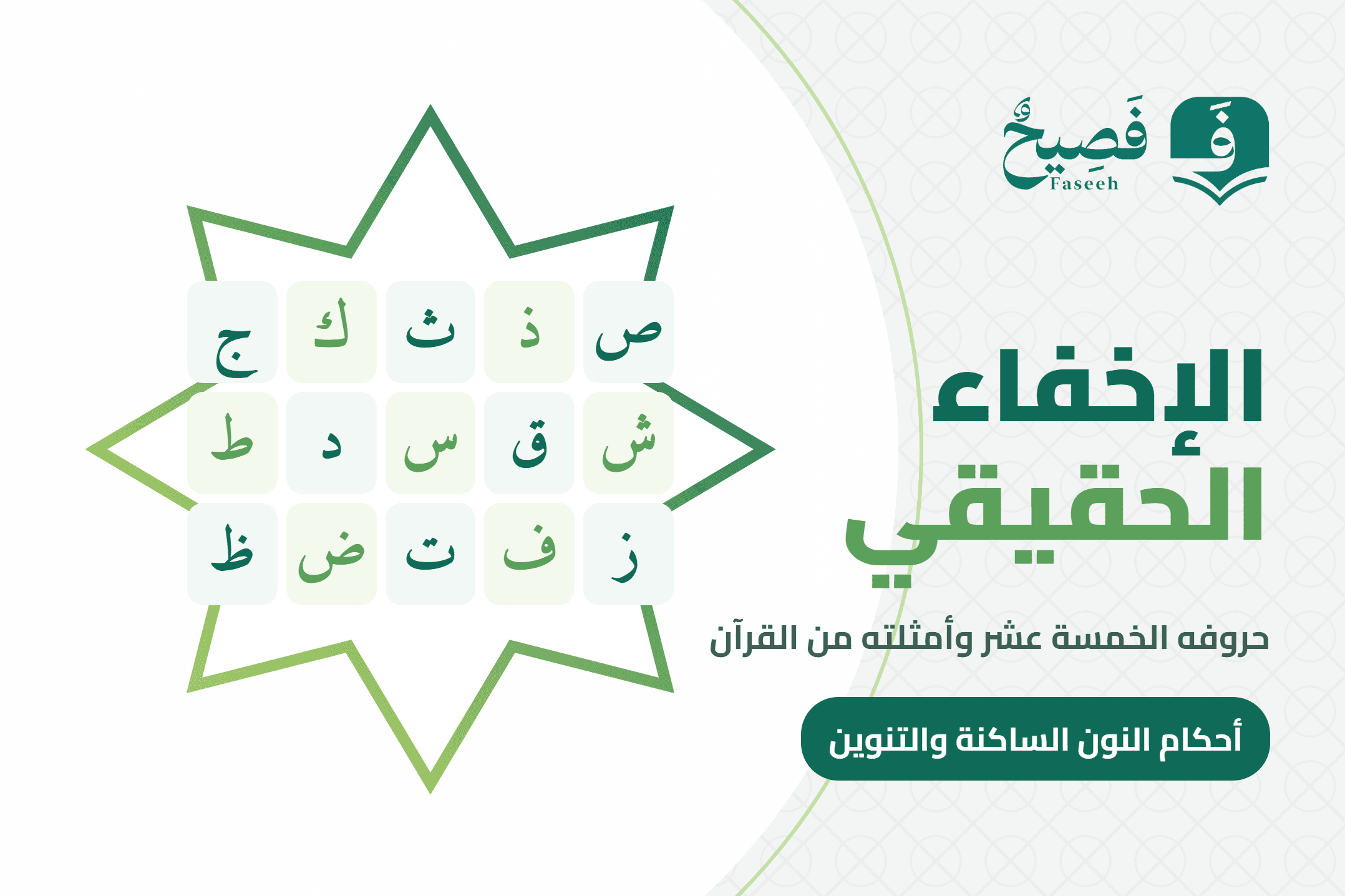
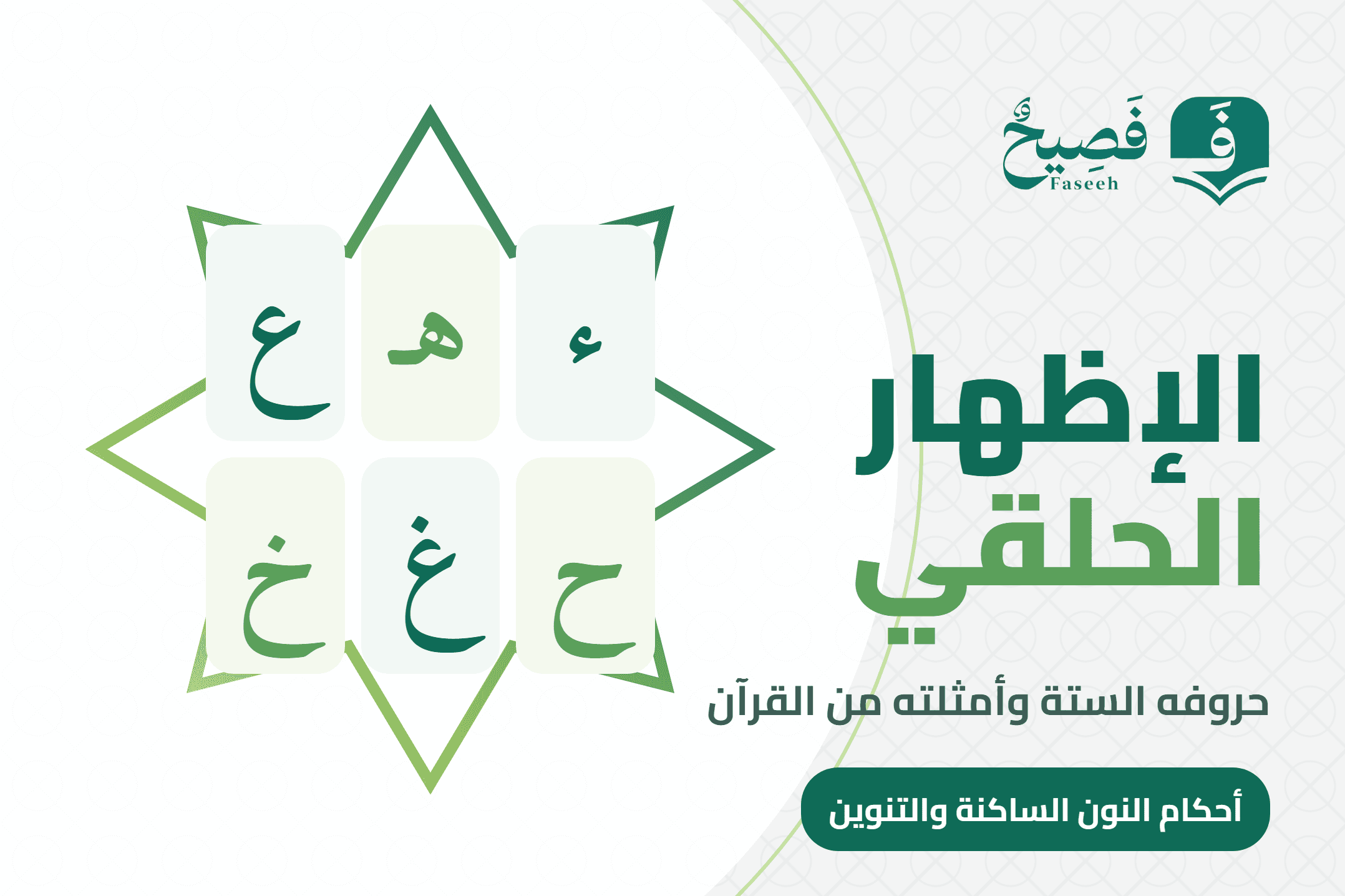
Students study Izhar, Idgham, Iqlab, and Ikhfa and learn how to identify and apply each rule within Quranic verses. The article about rules of Noon Saakin and Tanween provides an introduction to these four cases.
Students also study the rules of Meem Saakin: oral clarity, oral merging, and oral concealment, while learning how to produce Ghunnah without exaggeration or reduction.
Madd, Heavy Pronunciation, and Light Pronunciation
The learner studies natural and secondary elongation, the required length of each type, and the differences between reciting during continuation and stopping.
The curriculum also explains heavy and light letters, the rules of Raa, and the pronunciation of the letter Laam in the name of Allah.
Stopping and Starting
This subject teaches students how to choose suitable stopping points and avoid pauses that may interrupt or alter the meaning. These rules should be applied during recitation rather than studied only as isolated definitions.
Individual or Group Lessons: Which Is Better?
Individual lessons are suitable for students who need detailed articulation correction, a personalized learning plan, or more time to recite in front of the teacher. They are especially useful for beginners and learners with repeated pronunciation mistakes.
Group lessons may be appropriate for students who already have a good foundation and want to study the rules according to a fixed schedule. However, large groups may provide limited time for each student to recite and receive individual feedback.
Recorded courses offer flexibility and allow students to repeat explanations, but they cannot listen to the learner or correct their performance. Combining structured content, live lessons, and daily practice is often the most effective approach.
How Do You Choose the Right Tajweed Program?
Begin With a Level Assessment
A suitable program should assess reading accuracy, articulation, letter characteristics, rule application, stopping and starting, and fluency. This prevents students from joining a level that does not match their abilities.
Check the Teacher’s Qualifications
Accurate recitation alone does not automatically make someone an effective teacher. The instructor should be able to identify the reason behind a mistake, simplify complex rules, and provide practical exercises for correction.
Balance Theory With Application
Ask how much lesson time is allocated to student recitation. A program that only explains rules may increase theoretical knowledge without improving actual performance.
Review the Curriculum and Levels
Students should understand what each level covers, how progress is evaluated, and what skills they are expected to master. Progress should depend on proficiency rather than simply completing a fixed number of lessons.
Look for Continuous Support
Regular assignments, audio submissions, teacher feedback, and progress reports improve learning outcomes. A trial lesson can also help students evaluate the teacher’s explanation, communication, and correction methods before enrolling.
Can Tajweed Be Mastered Online?
Yes. Online Tajweed study can produce measurable progress when it includes live instruction, clear audio, a specialized teacher, a gradual curriculum, and regular practice between lessons.
During a video lesson, the teacher can listen to pronunciation, observe mouth movements, demonstrate the correct sound, and ask the student to repeat it.
The required study period varies according to the learner’s reading level, pronunciation mistakes, objectives, lesson frequency, and daily practice. Students should therefore be cautious about programs promising mastery within a fixed short period without conducting an assessment.
Studying Tajweed Online With Faseeh
The learning journey at Faseeh Platform begins with an assessment of the student’s reading ability, articulation points, listening discrimination, visual recognition, and spelling skills.
Faseeh provides individual lessons, structured content, recitation recording reviews, written and audio feedback, regular progress monitoring, and periodic reports.
Beginners may start with teaching Tajweed to beginners before moving to advanced rules.
Start From Your Real Level
Successful online Tajweed study does not depend only on completing many lessons or memorizing definitions. It begins with an accurate assessment and continues through practical recitation and regular correction.
Book an assessment lesson with Faseeh Platform to identify the most suitable pathway for improving your Quran reading and recitation.