Ikhfa Haqiqi in Tajweed: The 15 Letters and How to Say Them
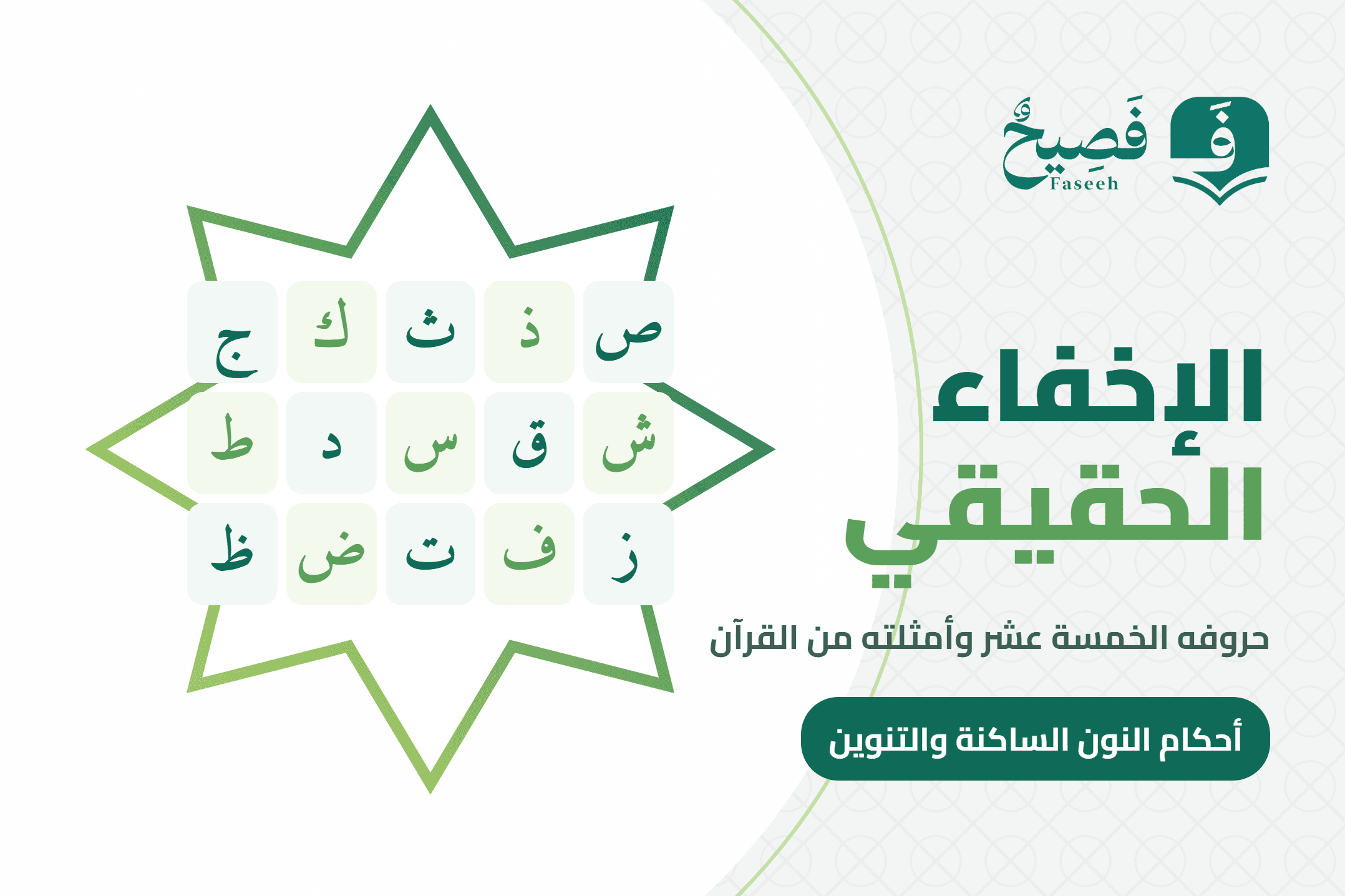
Ikhfa Haqiqi (الإخفاء الحقيقي) is the fourth rule of Noon Saakin and Tanween, and the most frequent of the four in the Quran. In one line: when a noon saakin or tanween is followed by one of the fifteen ikhfa letters, the noon is pronounced in a state between clear pronunciation and merging — with no shaddah on the next letter — and a nasal ghunnah held for two counts.
Ikhfa means "concealment": the noon is hidden, so the tongue does not make its usual contact. It is called haqiqi ("true") to distinguish it from ikhfa shafawi, the rule of meem saakin before ب. This guide covers the fifteen letters, how to pronounce ikhfa correctly, its three levels, heavy and light ghunnah, verified Quran examples for every letter, and exercises.
Part of our series on the rules of Noon Saakin and Tanween. New to the topic? Start with Izhar Halqi.
Ikhfa at a Glance
| Linguistic meaning | Concealment |
| Tajweed meaning | Pronouncing noon saakin or tanween between izhar and idgham, without shaddah, keeping the ghunnah |
| Letters | Fifteen: ص ذ ث ك ج ش ق س د ط ز ف ت ض ظ |
| Where it occurs | One word or two words (noon saakin) · two words only (tanween) |
| Ghunnah | Two counts — heavy or light depending on the next letter |
| Sign in the mushaf | Noon without a sukoon · staggered tanween |
The Fifteen Letters of Ikhfa
They are the letters left over after the six izhar letters, the six idgham letters and the single iqlab letter (ب). Imam al-Jamzuri gathered them in the first letters of a line from Tuhfat al-Atfal:
«صِفْ ذا ثَنا كَمْ جادَ شَخْصٌ قَدْ سَما ... دُمْ طَيِّبًا زِدْ في تُقًى ضَعْ ظالِمَا»
An easier way to remember them: learn the letters of the other three rules. Any letter that is not one of them is an ikhfa letter.
Why Is the Noon Concealed?
It comes down to the distance between articulation points:
- With izhar letters the distance is very large (the throat), so the noon is clear.
- With idgham letters the distance is very small, so the noon merges completely.
- With ikhfa letters the distance is medium — too close for izhar, too far for idgham. So the result is in between: the ghunnah (the noon's quality) stays, and the tongue's contact (the noon's articulation) disappears.
How to Pronounce Ikhfa Correctly
This is the most important part, because ikhfa is the most commonly mispronounced rule:
- Do not touch the tip of the tongue to the gum ridge as you would for a clear noon. This is the key difference.
- Move straight toward the next letter's articulation point. In ﴿يُنفِقُونَ﴾ the lower lip moves toward the upper teeth for the ف; in ﴿أَندَادٗا﴾ the tongue tip heads to where the د is made.
- Let the ghunnah come out of the nose for two counts.
- Then pronounce the next letter without shaddah. Ikhfa is not idgham.
Quick test: say ﴿كُنتُمۡ﴾ and watch your tongue. If its tip touches the gum ridge before the ت, you made izhar.
The Three Levels of Ikhfa
| Level | Letters | Why | Example |
|---|---|---|---|
| Strongest (closest to idgham) | ط · د · ت | Produced at the tongue tip, nearest to the noon | ﴿أَندَادٗا﴾ |
| Weakest (closest to izhar) | ق · ك | Produced at the back of the tongue, furthest away | ﴿مِنكُمۡ﴾ |
| Middle | The other ten | Medium distance | ﴿يُنصَرُونَ﴾ |
Heavy and Light Ghunnah
The ghunnah of ikhfa follows the letter after it.
- Before the five heavy (isti'la) ikhfa letters — ص · ض · ط · ظ · ق — the ghunnah is heavy: ﴿يُنصَرُونَ﴾ · ﴿مَّنضُودٖ﴾ · ﴿قِنطَارٗا﴾ · ﴿تَنظُرُونَ﴾ · ﴿يَنقُضُونَ﴾.
- Before the others it is light: ﴿يُنفِقُونَ﴾ · ﴿كُنتُمۡ﴾ · ﴿أُنزِلَ﴾.
Examples for Every Letter
All examples are taken from the Madinah mushaf text.
| Letter | Noon saakin, one word | Noon saakin, two words | Tanween |
|---|---|---|---|
| ص | ﴿يُنصَرُونَ﴾ 2:48 | ﴿مِّن صِيَامٍ﴾ 2:196 | ﴿بَقَرَةٞ صَفۡرَآءُ﴾ 2:69 |
| ذ | ﴿تُنذِرۡهُمۡ﴾ 2:6 | ﴿مَّن ذَا﴾ 2:245 | ﴿كَامِلَةٞ ذَٰلِكَ﴾ 2:196 |
| ث | ﴿أُنثَىٰ﴾ 3:36 | ﴿مِن ثَمَرَةٖ﴾ 2:25 | ﴿جَمِيعٗا ثُمَّ﴾ 2:29 |
| ك | ﴿مِنكُمۡ﴾ 2:65 | ﴿إِن كُنتُمۡ﴾ 2:23 | ﴿ءَايَةٞ كَذَٰلِكَ﴾ 2:118 |
| ج | ﴿فَأَنجَيۡنَٰكُمۡ﴾ 2:50 | ﴿فَمَن جَآءَهُۥ﴾ 2:275 | ﴿قَوۡمٗا جَبَّارِينَ﴾ 5:22 |
| ش | ﴿وَأَنشَأۡنَا﴾ 6:6 | ﴿إِن شَآءَ﴾ 2:70 | ﴿عَذَابٞ شَدِيدٞ﴾ 3:4 |
| ق | ﴿يَنقُضُونَ﴾ 2:27 | ﴿مِن قَبۡلِكَ﴾ 2:4 | ﴿شَيۡءٖ قَدِيرٞ﴾ 2:20 |
| س | ﴿وَتَنسَوۡنَ﴾ 2:44 | ﴿عَن سَبِيلِ﴾ 2:217 | ﴿كَلِمَةٖ سَوَآءِۭ﴾ 3:64 |
| د | ﴿أَندَادٗا﴾ 2:22 | ﴿مِّن دُونِ﴾ 2:23 | ﴿وَلِكُلّٖ دَرَجَٰتٞ﴾ 6:132 |
| ط | ﴿قِنطَارٗا﴾ 4:20 | ﴿مِن طَيِّبَٰتِ﴾ 2:57 | ﴿حَلَٰلٗا طَيِّبٗا﴾ 2:168 |
| ز | ﴿أُنزِلَ﴾ 2:4 | ﴿فَإِن زَلَلۡتُم﴾ 2:209 | ﴿كُلّٖ زَوۡجَيۡنِ﴾ 11:40 |
| ف | ﴿يُنفِقُونَ﴾ 2:3 | ﴿مِن فَضۡلِهِۦ﴾ 2:90 | ﴿عُمۡيٞ فَهُمۡ﴾ 2:18 |
| ت | ﴿كُنتُمۡ﴾ 2:23 | ﴿مِن تَحۡتِهَا﴾ 2:25 | ﴿جَنَّٰتٖ تَجۡرِي﴾ 2:25 |
| ض | ﴿مَّنضُودٖ﴾ 11:82 | ﴿وَمَن ضَلَّ﴾ 10:108 | ﴿ذُرِّيَّةٞ ضُعَفَآءُ﴾ 2:266 |
| ظ | ﴿تَنظُرُونَ﴾ 2:50 | ﴿مِن ظُهُورِهَا﴾ 2:189 | ﴿قَوۡمٖ ظَلَمُوٓاْ﴾ 3:117 |
Facts From the Mushaf
- Ikhfa is the most frequent noon rule in the Quran, occurring thousands of times — reason enough to master it first.
- ت and ف are the most frequent ikhfa letters (over a thousand occurrences each).
- ض after a noon saakin inside one word appears in only one word in the whole Quran: ﴿مَّنضُودٖ﴾, twice (Hud 11:82 and Al-Waqi'ah 56:29).
How the Mushaf Shows Ikhfa
- A concealed noon has no sukoon: compare ﴿مِنكُمۡ﴾ (no sukoon = ikhfa) with ﴿مِنۡهُمۡ﴾ (sukoon = izhar).
- Tanween with ikhfa is staggered: the two marks are offset, as in ﴿عَذَابٞ شَدِيدٞ﴾, unlike the stacked tanween of izhar.
Ikhfa Haqiqi vs Ikhfa Shafawi
| Ikhfa Haqiqi | Ikhfa Shafawi | |
|---|---|---|
| Concealed letter | Noon saakin and tanween | Meem saakin |
| Trigger letters | Fifteen | One: ب |
| Example | ﴿مِنكُمۡ﴾ | ﴿تَرۡمِيهِم بِحِجَارَةٖ﴾ |
| Ghunnah | Two counts | Two counts |
Common Mistakes
- Pronouncing the noon clearly — touching the gum ridge before the next letter. The most common mistake.
- Turning the noon into a meem — closing the lips in ﴿يُنفِقُونَ﴾.
- Turning it into a long vowel — reading ﴿أَنتُمۡ﴾ as aantum.
- Adding shaddah to the next letter — as if it were idgham.
- Ghunnah too long or too short — it is exactly two counts.
- Light ghunnah before heavy letters — the ghunnah of ﴿يَنقُضُونَ﴾ must be heavy.
Practice Exercises
| # | Verse | Answer |
|---|---|---|
| 1 | ﴿وَمِمَّا رَزَقۡنَٰهُمۡ يُنفِقُونَ﴾ (2:3) | ﴿يُنفِقُونَ﴾ — before ف, light ghunnah |
| 2 | ﴿وَلَا هُمۡ يُنصَرُونَ﴾ (2:48) | ﴿يُنصَرُونَ﴾ — before ص, heavy ghunnah |
| 3 | ﴿إِنَّ ٱللَّهَ عَلَىٰ كُلِّ شَيۡءٖ قَدِيرٞ﴾ (2:20) | Tanween before ق — heavy ghunnah, weakest level |
| 4 | ﴿فَلَا تَجۡعَلُواْ لِلَّهِ أَندَادٗا﴾ (2:22) | ﴿أَندَادٗا﴾ — before د, strongest level |
| 5 | ﴿كُلُواْ مِن طَيِّبَٰتِ مَا رَزَقۡنَٰكُمۡ﴾ (2:57) | Before ط — heavy ghunnah, strongest level |
Frequently Asked Questions
What are the letters of ikhfa?
Fifteen: ص ذ ث ك ج ش ق س د ط ز ف ت ض ظ.
Why is it called ikhfa haqiqi?
To distinguish it from ikhfa shafawi (meem saakin before ب), and because concealment applies to the noon saakin and tanween more than to any other letter.
How long is the ghunnah in ikhfa?
Two counts. It is heavy before ص ض ط ظ ق and light before the other letters.
What is the difference between ikhfa and idgham?
In idgham the noon disappears into the next letter, which takes a shaddah. In ikhfa the noon's ghunnah remains and the next letter has no shaddah.
How many rules of noon saakin and tanween are there?
Four: Izhar, Idgham, Iqlab and Ikhfa. See the full guide with a summary table.
Summary
Fifteen letters. When one follows a noon saakin or tanween, do not touch the noon's articulation point — prepare for the next letter and let a two-count ghunnah come from the nose, heavy before the heavy letters and light before the rest. The mushaf shows it: a noon without sukoon, or staggered tanween.
Ikhfa is the most frequent rule and the most often mispronounced, and the mistakes are hard to hear in your own recitation. At Faseeh, students recite live to qualified teachers who correct every letter.