Teaching the alphabet to children step by step |faseeh
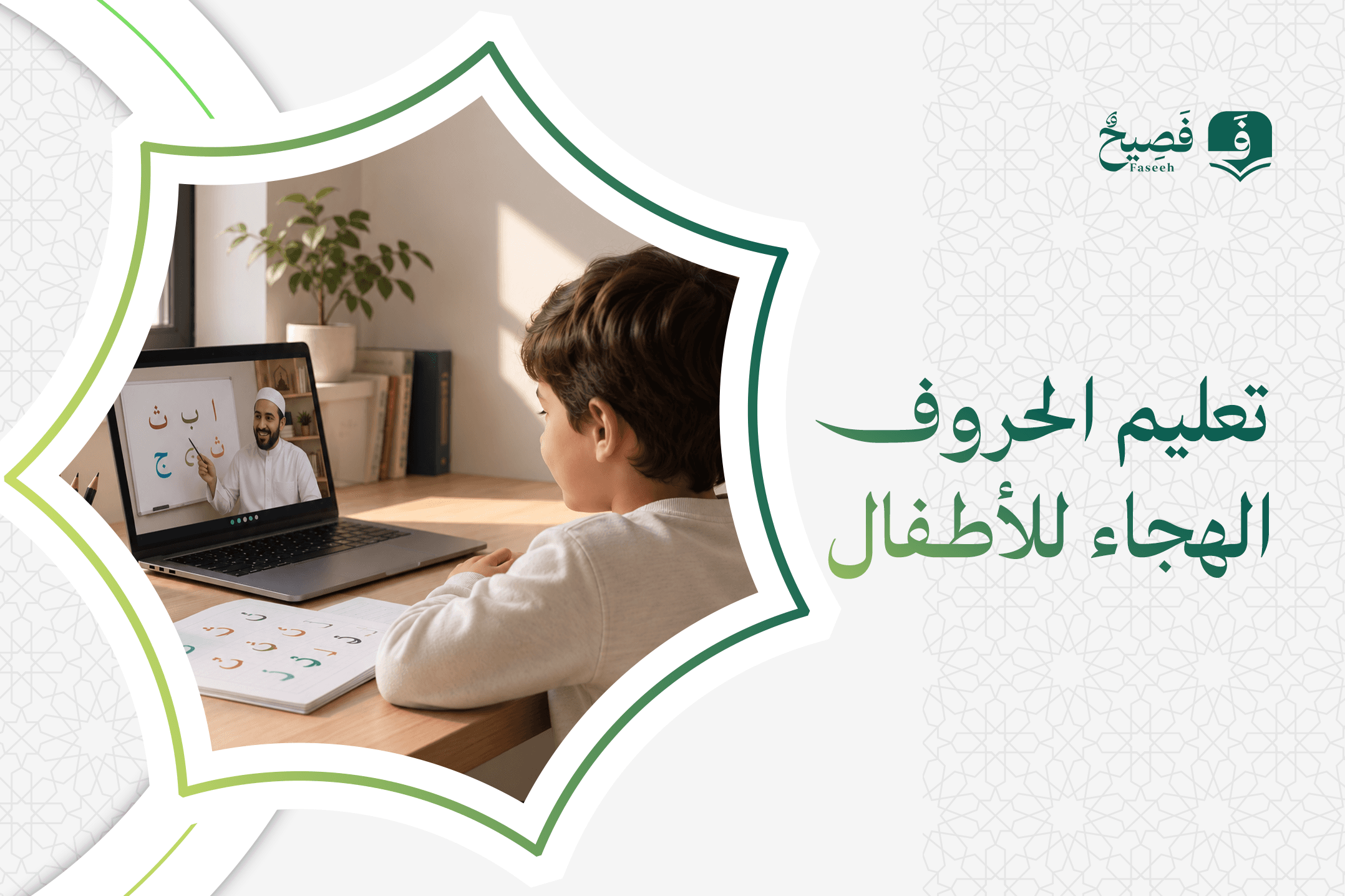
Teaching Arabic alphabet letters to children is the first step toward mastering reading and writing. A child needs to understand the shape of each letter, its sound, and the correct way to pronounce it before moving to syllables and words. Simply memorizing the letters in order is not enough; the child must be able to recognize them, read them with vowel marks, and use them within new words.
A proper foundation helps children read confidently and prevents them from depending on memorizing words or guessing them. It also prepares them for reading the Holy Quran correctly, especially when attention is given to pronunciation and articulation points from an early stage.
Why Is Learning Arabic Letters the Foundation of Reading?
Arabic words are formed from connected letters and sounds. Therefore, reading begins with understanding the relationship between the shape of the letter and the sound it represents. Teaching Arabic letters to children helps them:
- Recognize the shapes and sounds of letters.
- Distinguish between similar letters.
- Read letters with short vowels.
- Understand the shape of letters inside words.
- Combine sounds and form syllables.
- Read new words without memorization.
- Improve pronunciation and prepare for writing.
- Build a strong foundation for Quran reading.
Arabic language learning goes beyond academic achievement; it is connected to a child’s identity and ability to communicate and express themselves. You can learn more about The Status of the Arabic Language Among Languages and its role in preserving culture and knowledge.
Is Memorizing the Alphabet Order Enough?
A child may be able to repeat the Arabic alphabet from Alif to Ya, but still struggle to recognize letters when they appear in a different order or inside words. In this case, the child has memorized the sequence only and has not developed actual reading skills.
Teaching Arabic alphabet letters requires the child to know the letter name and sound, distinguish it from similar letters, read it with different vowel marks, and recognize its forms at the beginning, middle, and end of words.
When the child can use these skills to read unfamiliar words, they have truly started learning how to read.
Steps for Teaching Arabic Alphabet Letters to Children
1. Assessing the Child’s Level
The first step is understanding the skills the child already has before beginning instruction. Some children may know some letters but confuse their sounds, while others may recognize individual letters but cannot combine them.
The assessment includes:
- Visual recognition of letters.
- Auditory distinction between sounds.
- Pronunciation ability.
- Reading vowel marks.
- Combining sounds.
This helps choose a suitable starting point according to the child’s needs instead of teaching a level that is too easy or too difficult.
2. Connecting the Letter With Its Sound
It is not enough to teach a child that the letter is called “Baa”; they should also learn its sound and how it appears inside words such as “Baab”.
The child should see the letter clearly, hear its correct pronunciation, understand the mouth movement, and practice words that contain the same letter.
This method helps children understand the function of the letter instead of memorizing it as only a shape.
3. Introducing a Limited Number of Letters
Introducing all letters in a short period may cause confusion. It is better to teach small groups of letters and review them through different activities before introducing new ones.
The child is ready to move forward when they can:
- Recognize the letter without help.
- Pronounce its sound correctly.
- Distinguish it from similar letters.
- Read it with the vowel marks they learned.
4. Distinguishing Between Similar Letters
Some Arabic letters have similar shapes, such as:
ب – ت – ث
ج – ح – خ
س – ش
ص – ض
Children need to notice the number and position of dots and practice matching, sorting, and selecting the correct letter inside words.
5. Learning Vowels and Combining Sounds
After learning a suitable number of letters, children begin learning the short vowels:
- Fatḥah: بَ
- Ḍammah: بُ
- Kasrah: بِ
Then they gradually move to elongation letters, sukoon, tanween, and shaddah.
Understanding The Difference Between Movement and Elongation in Recitation helps children recognize the difference between short sounds and extended sounds.
After mastering these skills, children begin combining sounds to form syllables and simple words. They should practice pronouncing each sound and combining them independently to develop real reading ability.
6. Learning the Forms of Letters Within Words
Some Arabic letters change their shape depending on their position in the word. Therefore, children need to learn the different forms of each letter when it appears separately, at the beginning, in the middle, and at the end of a word.
It is recommended to introduce these forms through simple and clear words so the child understands how letters are used practically.
The Importance of Letter Articulation Points
A child may recognize a letter but pronounce it incorrectly, such as confusing between:
س – ث
ت – ط
ك – ق
Therefore, attention should be given to the place where each sound is produced, as well as the movement of the tongue and lips.
Learning Points of Articulation in Tajweed helps children establish correct pronunciation, while understanding Characteristics of Letters in Tajweed explains the differences between similar sounds.
Useful Home Activities
Parents can support teaching Arabic alphabet letters to children through simple and enjoyable activities, such as:
- Searching for a specific letter inside a story.
- Matching letters with pictures that start with the same sound.
- Choosing a letter card and mentioning a word that begins with it.
- Sorting similar letters.
- Reading letters with different vowel marks.
- Creating short words using letter cards.
- Identifying the position of a sound at the beginning, middle, or end of a word.
Activities should be short, varied, and enjoyable, while avoiding pressure or comparing the child with others.
Common Mistakes to Avoid
Some common mistakes include teaching all letters at once, focusing only on the letter name instead of its sound, and relying only on songs or videos.
Moving to words before mastering vowel marks may encourage children to guess instead of actually reading.
It is also important not to ignore pronunciation mistakes or force children to write letters repeatedly before understanding the connection between the letter and its sound.
A child may need a specialized teacher if they continue confusing letters or experience difficulty combining sounds and reading words.
Teaching Arabic Letters Online With Faseeh
Online learning can be successful when it depends on direct individual lessons, a gradual curriculum, immediate pronunciation correction, and continuous progress tracking.
When choosing an Arabic Language Learning Platform, parents should ensure that it provides an initial assessment, specialized teachers, and progress reports that show the child's development.
Faseeh Educational Platform provides a structured learning path for children to establish Arabic and Quranic reading skills. The journey begins by assessing the child's level, then training them on letters, vowels, pronunciation points, and combining syllables.
After mastering basic reading skills, children can gradually move to Teaching Tajweed for Beginners and apply appropriate Quran recitation rules according to their level.
Start From Your Child’s Level
The goal of teaching Arabic alphabet letters to children is not to finish learning letters quickly, but to build a strong foundation that enables the child to read, understand, and pronounce words correctly.
A successful learning journey starts with assessing the child's level, then introducing skills gradually with continuous practice and support.
Book a Trial Lesson With Faseeh Platform and discover the suitable learning path to build your child’s Arabic reading and alphabet skills.