Idgham With and Without Ghunnah: Letters & Examples
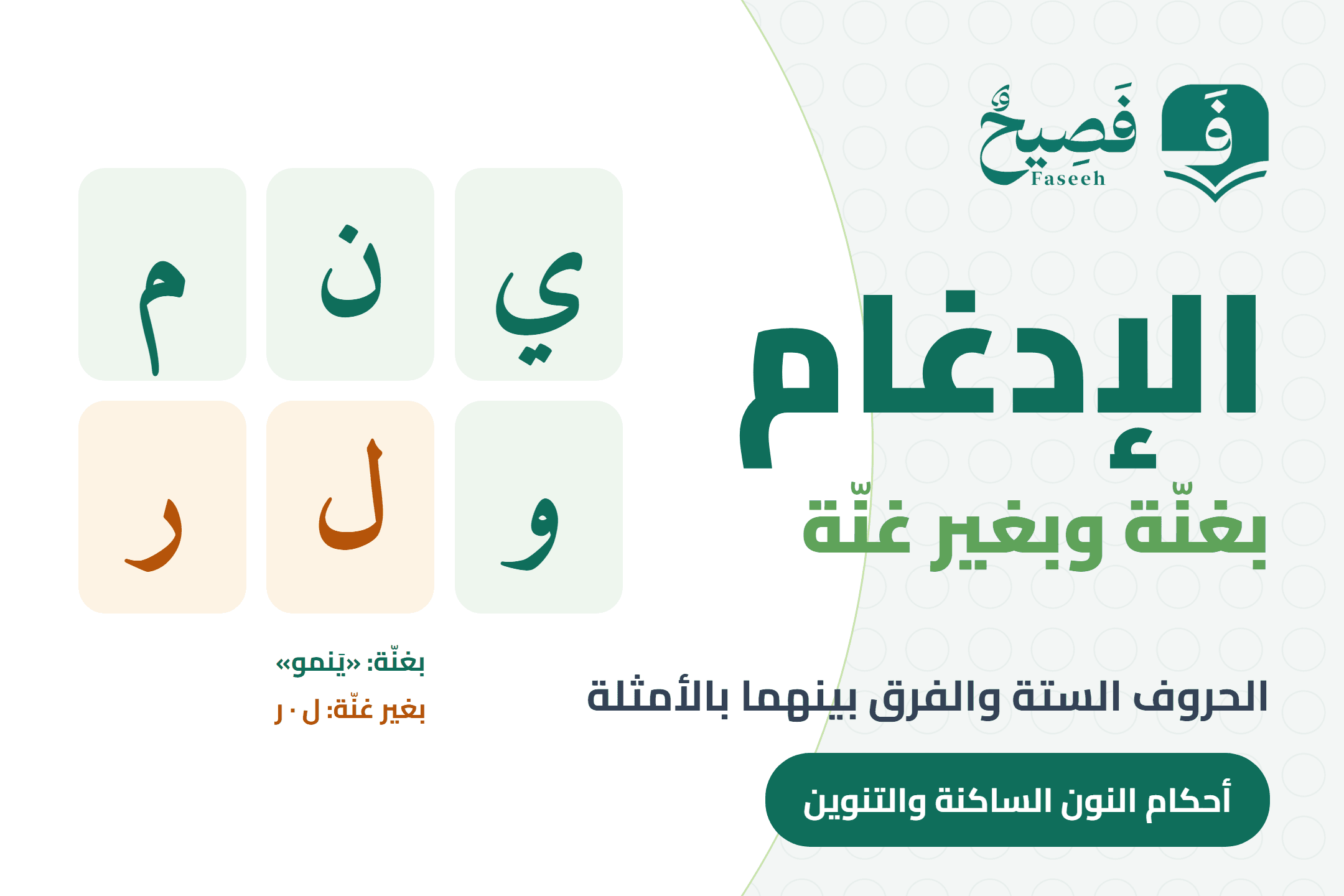
Idgham (merging) is the second rule of Noon Sakinah and Tanween in Tajweed. In one line: when a Noon Sakinah or Tanween is followed — in the next word — by one of the six letters of «يَرْمَلُون» (ي ر م ل و ن), the Noon is merged into that letter so the two become one doubled (mushaddad) letter.
It comes in two types: Idgham with Ghunnah (nasal sound) with four letters, gathered in the word «يَنْمُو» (yanmu), and Idgham without Ghunnah with only two letters: Lam and Ra. This guide explains the difference, why some Idgham is called complete and some incomplete, examples from the Quran with verse numbers, the four words where Idgham never happens, and practice exercises with answers.
This article is part of our series on the rules of Noon Sakinah and Tanween — the four rules: Izhar, Idgham, Iqlab and Ikhfa.
Idgham at a glance
| Linguistic meaning | To insert or merge one thing into another |
| Tajweed meaning | Merging a silent letter into a voweled letter so they become one doubled letter |
| Letters | Six, gathered in «يَرْمَلُون»: ي ر م ل و ن |
| Two types | With Ghunnah: ي ن م و («يَنْمُو») · Without Ghunnah: ل ر |
| Condition | The Noon is at the end of a word and the Idgham letter starts the next word |
| Ghunnah length | Two counts (harakat) with Ghunnah; none without |
| Mushaf sign | Noon with no sukun · staggered Tanween · usually a shaddah on the next letter |
Type 1: Idgham with Ghunnah (ي ن م و)
When a Noon Sakinah or Tanween is followed by one of the letters of «يَنْمُو» in the next word, the Noon merges into the next letter while the Ghunnah remains — a nasal sound held for two counts.
These four letters split into two groups:
| Group | Letters | What happens to the Noon | Example |
|---|---|---|---|
| Complete Idgham (kamil) | Noon · Meem | The Noon disappears completely; the Ghunnah you hear belongs to the doubled Noon or Meem | ﴿مِّن نِّعۡمَةٖ﴾ An-Nahl 16:53 |
| Incomplete Idgham (naqis) | Waw · Ya | The Noon's body disappears but its quality (the Ghunnah) stays, blended into the Waw or Ya | ﴿مَن يَقُولُ﴾ Al-Baqarah 2:8 |
In practice: with complete Idgham you hear a full doubled letter — ﴿مِّن نِّعۡمَةٖ﴾ is read min-ni'mah. With incomplete Idgham the nasal sound is still heard on the Ya or Waw — ﴿مَن يَقُولُ﴾ is read may-yaqool with a clear Ghunnah. That is why the Medina Mushaf puts no full shaddah on the Ya and Waw after a merged Noon.
Type 2: Idgham without Ghunnah (ل ر)
When a Noon Sakinah or Tanween is followed by Lam or Ra in the next word, the Noon merges completely and without Ghunnah: the Noon and its nasal sound both disappear, and the next letter is read fully doubled.
- ﴿مِّن رَّبِّهِمۡ﴾ (Al-Baqarah 2:5) is read mir-rabbihim.
- ﴿هُدٗى لِّلۡمُتَّقِينَ﴾ (Al-Baqarah 2:2) is read hudal-lil-muttaqeen.
Why no Ghunnah? Lam and Ra are very close to the Noon's articulation point (all three come from the tip of the tongue), so the nasal sound dissolves completely into the new letter.
Examples of Idgham from the Quran
All examples are taken from the text of the Medina Mushaf, with verse numbers.
Idgham with Ghunnah
| Letter | With Noon Sakinah | Verse | With Tanween | Verse |
|---|---|---|---|---|
| Ya ي | ﴿مَن يَقُولُ﴾ | 2:8 | ﴿وُجُوهٞ يَوۡمَئِذٍ﴾ | 88:2 |
| Noon ن | ﴿مِّن نِّعۡمَةٖ﴾ | 16:53 | ﴿يَوۡمَئِذٖ نَّاعِمَةٞ﴾ | 88:8 |
| Meem م | ﴿مِن مَّآءٖ﴾ | 2:164 | ﴿مَثَلٗا مَّا﴾ | 2:26 |
| Waw و | ﴿مِن وَالٍ﴾ | 13:11 | ﴿وَرَعۡدٞ وَبَرۡقٞ﴾ | 2:19 |
Idgham without Ghunnah
| Letter | With Noon Sakinah | Verse | With Tanween | Verse |
|---|---|---|---|---|
| Lam ل | ﴿فَإِن لَّمۡ﴾ | 2:24 | ﴿هُدٗى لِّلۡمُتَّقِينَ﴾ | 2:2 |
| Ra ر | ﴿مِّن رَّبِّهِمۡ﴾ | 2:5 | ﴿غَفُورٞ رَّحِيمٌ﴾ | 2:173 |
Notice: every example spans two words — the Noon ends the first word and the Idgham letter begins the second. That condition never changes, as the next section shows.
The four words with no Idgham: Izhar Mutlaq
If a Noon Sakinah is followed by Waw or Ya within the same word, there is no Idgham — the Noon is pronounced clearly (Izhar). There are only four such words in the whole Quran:
| Word | Verse | If merged it would become |
|---|---|---|
| ﴿ٱلدُّنۡيَا﴾ ad-dunya | 2:85 | «ad-duyya» |
| ﴿بُنۡيَٰنٞ﴾ bunyan | 61:4 | «buyyan» |
| ﴿قِنۡوَانٞ﴾ qinwan | 6:99 | «qiwwan» |
| ﴿صِنۡوَانٞ﴾ sinwan | 13:4 | «siwwan» |
Merging here would confuse the word with a different one and lose its root, so the Noon is kept clear. Scholars call this Izhar Mutlaq (absolute clarity).
Exceptions in the narration of Hafs
Three places have an Idgham letter after a Noon, yet there is no Idgham in Hafs from 'Asim (via ash-Shatibiyyah):
| Place | Rule |
|---|---|
| ﴿وَقِيلَ مَنۡۜ رَاقٖ﴾ (Al-Qiyamah 75:27) | A brief pause (sakt) on the Noon of «man», then «raq» — marked by the small seen ۜ in the Mushaf |
| ﴿يسٓ * وَٱلۡقُرۡءَانِ﴾ (Ya-Sin 36:1–2) | Izhar of the Noon in «Ya-Seen» |
| ﴿نٓۚ وَٱلۡقَلَمِ﴾ (Al-Qalam 68:1) | Izhar of the Noon in «Noon» |
How the Mushaf shows Idgham
- A merged Noon has no sukun: compare ﴿مِنۡ عِندِ﴾ (Izhar, with sukun) with ﴿مِن مَّآءٖ﴾ (Idgham, no sukun).
- Shaddah on the next letter = complete Idgham: ﴿مِّن نِّعۡمَةٖ﴾ ﴿فَإِن لَّمۡ﴾.
- No shaddah on Waw/Ya = incomplete Idgham: ﴿مَن يَقُولُ﴾ ﴿مِن وَالٍ﴾ — the Ghunnah stays.
- Staggered Tanween (the two marks offset) means Idgham or Ikhfa; stacked Tanween means Izhar.
Common mistakes
- Pronouncing the Noon clearly: reading ﴿مِن مَّآءٖ﴾ as min maa'. Correct: mim-maa' with a doubled Meem and Ghunnah.
- Adding Ghunnah with Lam and Ra: there is no nasal sound at all with Lam and Ra in Hafs.
- Cutting the Ghunnah short in «yanmu»: it must be held for two full counts.
- Full doubling on Waw/Ya with no Ghunnah: ﴿مَن يَقُولُ﴾ is incomplete Idgham — keep the nasal sound.
- Merging inside one word: reading ﴿ٱلدُّنۡيَا﴾ as ad-duyya. Correct: clear Noon.
Practice exercises (with answers)
| # | Verse | Answer |
|---|---|---|
| 1 | ﴿فَمَن يَعۡمَلۡ مِثۡقَالَ ذَرَّةٍ خَيۡرٗا يَرَهُۥ﴾ (99:7) | ﴿فَمَن يَعۡمَلۡ﴾: Noon + Ya → incomplete Idgham with Ghunnah (and ﴿خَيۡرٗا يَرَهُۥ﴾: Tanween + Ya → the same) |
| 2 | ﴿وَيۡلٞ لِّكُلِّ هُمَزَةٖ لُّمَزَةٍ﴾ (104:1) | Two places, both Tanween + Lam → Idgham without Ghunnah |
| 3 | ﴿هُدٗى مِّن رَّبِّهِمۡ﴾ (2:5) | ﴿هُدٗى مِّن﴾ Tanween + Meem → complete with Ghunnah · ﴿مِّن رَّبِّهِمۡ﴾ Noon + Ra → without Ghunnah |
| 4 | ﴿وَمِنَ ٱلنَّخۡلِ مِن طَلۡعِهَا قِنۡوَانٞ﴾ (6:99) | ﴿قِنۡوَانٞ﴾: Noon + Waw in one word → no Idgham (Izhar Mutlaq) |
Frequently asked questions
What are the letters of Idgham?
Six letters gathered in «يَرْمَلُون»: Ya, Ra, Meem, Lam, Waw and Noon. Four are with Ghunnah («يَنْمُو») and two without: Lam and Ra.
What is the difference between Idgham with and without Ghunnah?
With Ghunnah (ي ن م و) the nasal sound is held for two counts. Without Ghunnah (ل ر) the Noon and its nasal sound disappear completely and the next letter is read fully doubled.
Can Idgham happen within one word?
No. Idgham of Noon Sakinah and Tanween only happens across two words. Within one word it is Izhar Mutlaq — and there are only four such words: ad-dunya, bunyan, qinwan, sinwan.
How many rules of Noon Sakinah and Tanween are there?
Four: Izhar, Idgham, Iqlab and Ikhfa. See all four with a summary table in our guide to the rules of Noon Sakinah and Tanween.
Summary
If a Noon Sakinah or Tanween is followed by one of «يَرْمَلُون» in the next word, merge it: with a two-count Ghunnah for «يَنْمُو», and without Ghunnah for Lam and Ra. Never inside a single word. Precision — especially complete vs incomplete Idgham and the length of the Ghunnah — comes from listening and correction by a teacher.
At Faseeh, students recite to a certified teacher in live one-to-one sessions, with every letter corrected as they go — from the articulation points of letters to Tajweed rules and memorization.