Noon Saakin and Tanween Rules: Izhar, Idgham, Iqlab, Ikhfa

The rules of Noon Sakinah and Tanween are among the most important basic rules in Tajweed. They help the reader recite the Holy Quran correctly and enable them to distinguish between the rules of Izhar, Idgham, Iqlab, and Ikhfa during recitation.
The importance of these rules is not limited to theoretical knowledge only; their value appears through practical application, as the learner understands when to pronounce Noon Sakinah or Tanween clearly, when to merge them with the following letter, when to change their sound, or when to hide their pronunciation while maintaining the Ghunnah.
In this article, we will learn about the definition of Noon Sakinah and Tanween, the difference between them, their four main rules, the letters of each rule, and simple examples that help beginners understand and apply Tajweed correctly.
What is Noon Sakinah?
Noon Sakinah is an original letter Noon that carries no vowel; meaning it is neither Fatha, Damma, nor Kasra. It remains pronounced and written in both connected and stopped recitation.
Noon Sakinah can appear in nouns, verbs, and particles, and it may occur in the middle or at the end of a word.
Examples:
- ﴿أَنْعَمْتَ﴾
- ﴿وَالْأَنْعَامُ﴾
- ﴿مِنْ﴾
- ﴿يَنْهَوْنَ﴾
What is Tanween?
Tanween is an additional silent Noon sound that is pronounced but not written. It appears only at the end of nouns and does not occur with verbs or particles.
Tanween has three forms:
- Dammatain (ـٌ), such as: ﴿عَلِيمٌ﴾
- Fathatain (ـً), such as: ﴿عَلِيمًا﴾
- Kasratain (ـٍ), such as: ﴿عَلِيمٍ﴾
Tanween is pronounced when continuing the recitation but is not pronounced when stopping.
To understand the difference between vowels and elongation in Quran recitation, you can read: The Difference Between Movement and Elongation in Recitation
What are the Rules of Noon Sakinah and Tanween?
The rules of Noon Sakinah and Tanween are divided into four main categories:
- Izhar (Clear Pronunciation).
- Idgham (Merging).
- Iqlab (Conversion).
- Ikhfa (Hidden Pronunciation).
The Tajweed rule is determined according to the letter that comes after Noon Sakinah or Tanween.
First: Izhar Halqi (Clear Pronunciation)
📖 Full guide with examples and exercises: Izhar Halqi and the 6 throat letters
What is Izhar?
Linguistically, Izhar means clarity and making something apparent. In Tajweed terminology, it means pronouncing Noon Sakinah or Tanween clearly from their original articulation point without merging, hiding, or adding extra Ghunnah.
What are the Letters of Izhar?
The six letters of Izhar are:
- Hamzah (ء).
- Ha (هـ).
- Ain (ع).
- Ha (ح).
- Ghayn (غ).
- Kha (خ).
These letters are called Izhar Halqi because they originate from the throat.
Examples of Izhar:
- ﴿مَنْ آمَنَ﴾
- ﴿مِنْ هَادٍ﴾
- ﴿مِنْ عِلْمٍ﴾
- ﴿مِنْ حَكِيمٍ﴾
How to Pronounce Izhar
When one of the Izhar letters comes after Noon Sakinah or Tanween, the Noon or Tanween is pronounced clearly without merging into the following letter.
Second: Idgham (Merging)
📖 Full guide with examples, complete vs incomplete Idgham and exercises: Idgham with and without Ghunnah
What is Idgham?
Idgham means merging Noon Sakinah or Tanween into the letter that follows it, so that they become one stressed letter from the same type as the second letter.
What are the Letters of Idgham?
The six letters of Idgham are collected in the word:
يرملون (Yarmaloon)
They are:
- Ya (ي).
- Ra (ر).
- Meem (م).
- Lam (ل).
- Waw (و).
- Noon (ن).
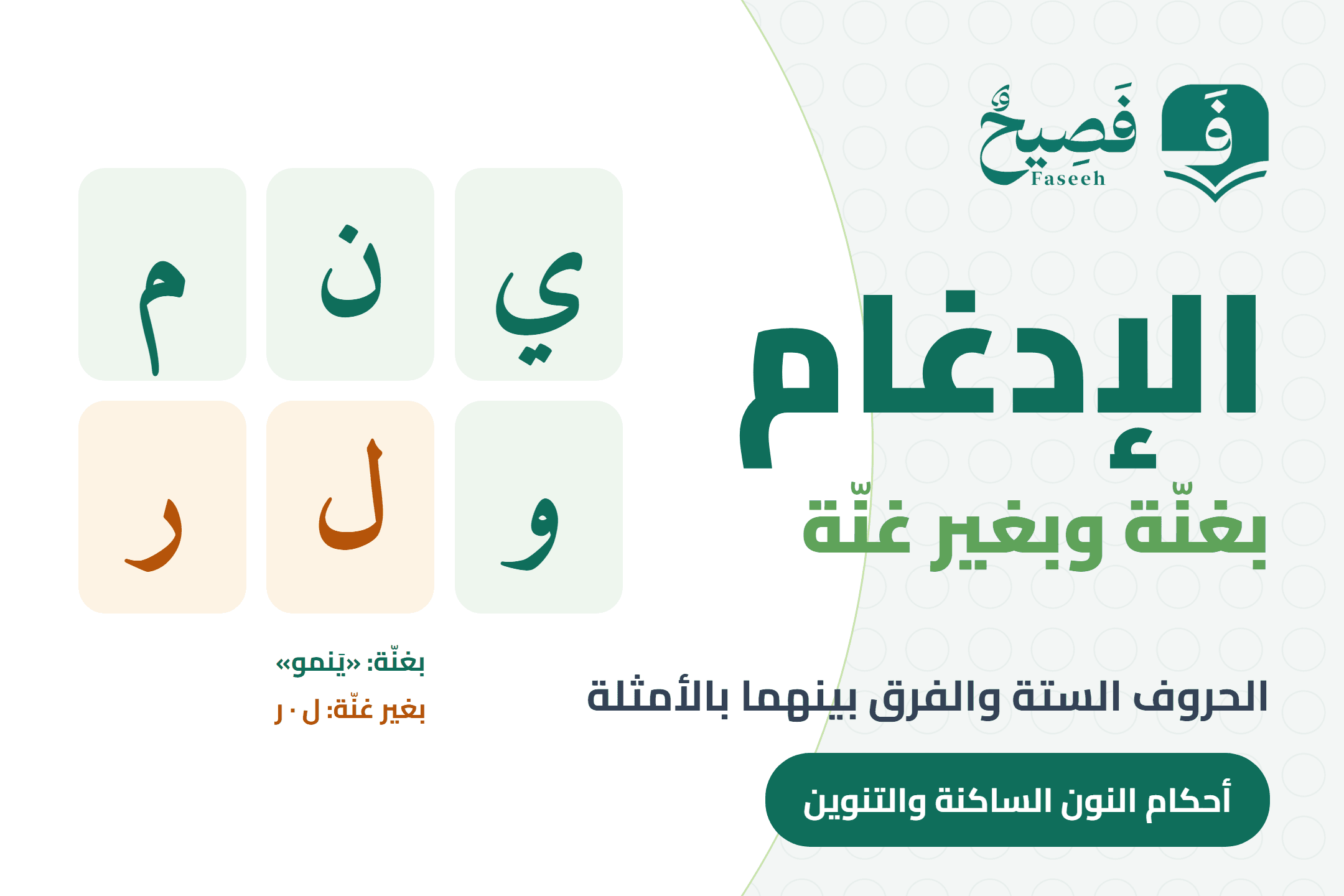
Idgham is divided into two types:
Idgham with Ghunnah
This type occurs with four letters:
ينمو (Yanmoo)
They are:
- Ya (ي).
- Noon (ن).
- Meem (م).
- Waw (و).
Examples:
- ﴿مَنْ يَعْمَلْ﴾
- ﴿مِنْ نُورٍ﴾
- ﴿مِنْ مَاءٍ﴾
In this rule, Noon Sakinah or Tanween merges into the following letter while maintaining Ghunnah for two counts.
Idgham Without Ghunnah
This type occurs with only two letters:
- Lam (ل).
- Ra (ر).
Examples:
- ﴿مِنْ رَبِّهِمْ﴾
- ﴿مِنْ لَدُنْهُ﴾
In this case, Noon Sakinah or Tanween merges into the following letter without Ghunnah.
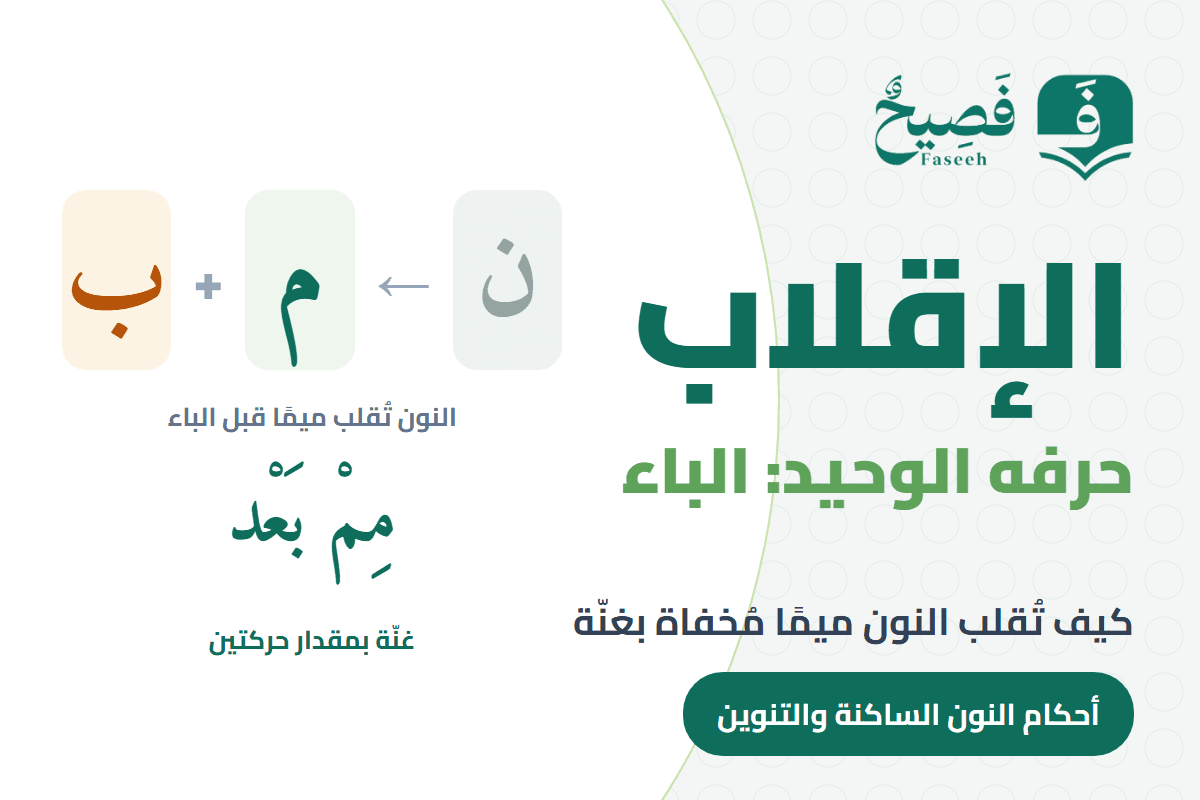
Third: Iqlab (Conversion)
What is Iqlab?
📖 Full guide with the Mushaf mark, pronunciation steps, Iqlab vs Ikhfa Shafawi and exercises: Iqlab in Tajweed
Iqlab means converting. In Tajweed terminology, it is changing Noon Sakinah or Tanween into a hidden Meem sound when the letter Ba (ب) comes after it, while maintaining Ghunnah for two counts.
What is the Letter of Iqlab?
Iqlab has only one letter:
Ba (ب)
Examples of Iqlab:
- ﴿مِنْ بَعْدِ﴾
- ﴿أَنْبِئْهُمْ﴾
- ﴿سَمِيعٌ بَصِيرٌ﴾
Fourth: Ikhfa Haqiqi (Hidden Pronunciation)
📖 Full guide with an example for every letter: Ikhfa Haqiqi and the 15 letters
What is Ikhfa?
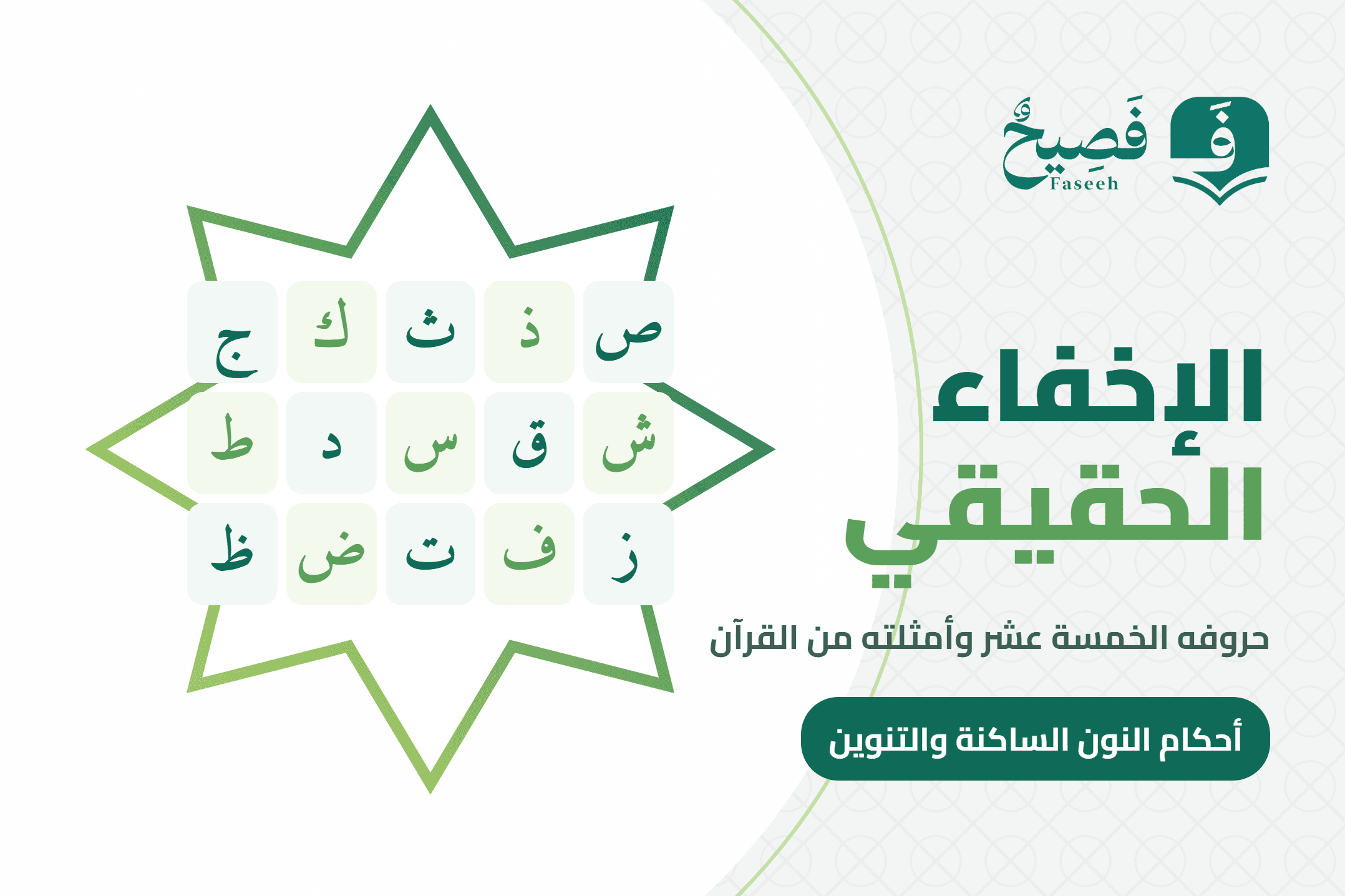
Ikhfa means hiding. In Tajweed terminology, it is pronouncing Noon Sakinah or Tanween in a middle state between Izhar and Idgham while maintaining Ghunnah for two counts.
What are the Letters of Ikhfa?
The letters of Ikhfa are fifteen:
- Saad (ص).
- Dhal (ذ).
- Tha (ث).
- Kaf (ك).
- Jeem (ج).
- Sheen (ش).
- Qaf (ق).
- Seen (س).
- Dal (د).
- Taa (ط).
- Zay (ز).
- Fa (ف).
- Ta (ت).
- Dad (ض).
- Dha (ظ).
Examples:
- ﴿مِنْ صَلْصَالٍ﴾
- ﴿مِنْ ذَكَرٍ﴾
- ﴿مِنْ قَبْلُ﴾
The Relationship Between Articulation Points and the Rules of Noon Sakinah and Tanween
It is not possible to apply the rules of Noon Sakinah and Tanween correctly without understanding the Articulation Points of Letters in Tajweed and their characteristics, because each rule depends on the following letter and its pronunciation method.
Learning these rules also requires a strong foundation in reading and letter pronunciation. Beginners can benefit from:
Abjad Foundation Program - Faseeh Educational Platform
which helps learners build their reading skills and prepare for studying Tajweed rules.
How Can Beginners Learn the Rules of Noon Sakinah and Tanween Easily?
Beginners can learn these rules through:
- Understanding the difference between Noon Sakinah and Tanween.
- Memorizing the names of the four rules.
- Learning the letters of each rule.
- Listening to correct Quranic examples.
- Practicing recitation continuously.
- Reading in front of a qualified teacher.
Learn Tajweed Rules with Faseeh Educational Platform
Faseeh Educational Platform provides specialized programs that help students learn Tajweed and correct Quran recitation through a structured educational path suitable for different ages and levels.
After mastering the basics of reading and Tajweed, students can choose the suitable program through: