Meem Sakinah Rules: Ikhfa, Idgham and Izhar Shafawi
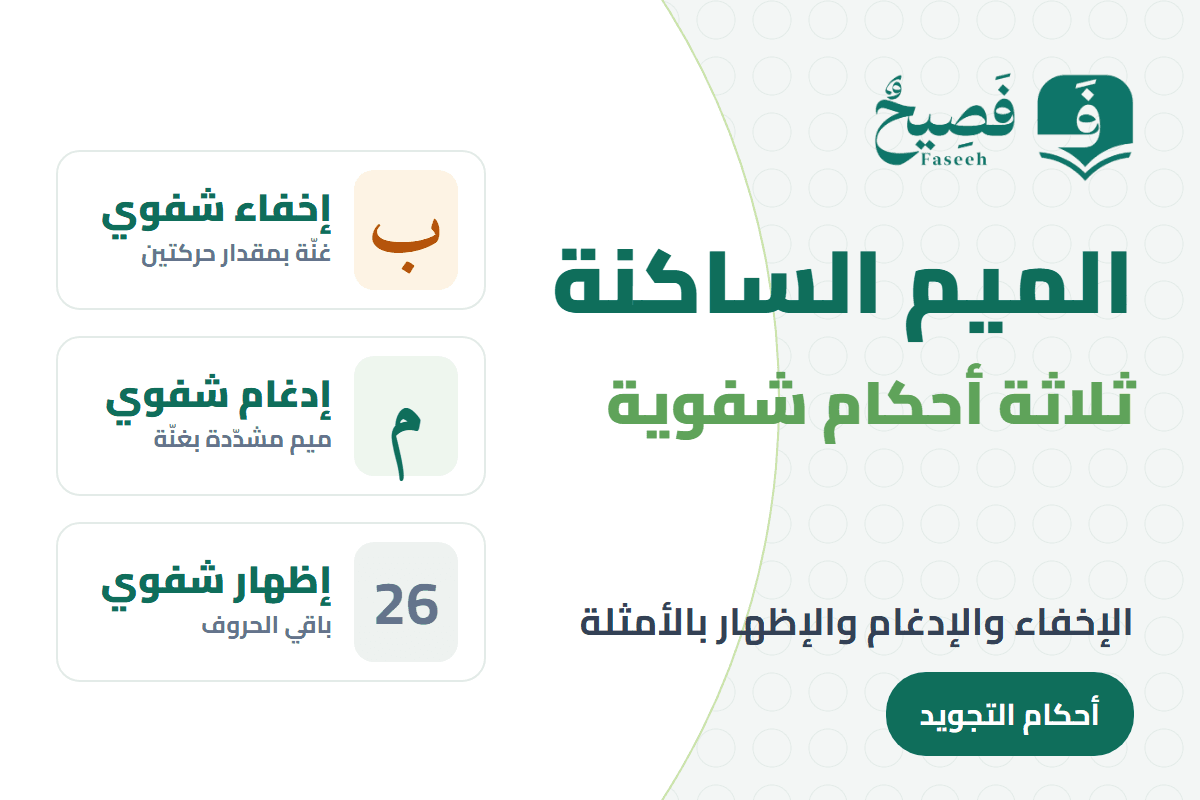
The rules of Meem Sakinah are three: Ikhfa Shafawi, Idgham Shafawi and Izhar Shafawi. The whole topic fits in one line: look at the letter that comes after the Meem Sakinah. If it is Ba (ب), the rule is Ikhfa. If it is Meem (م), the rule is Idgham. If it is any other letter, the rule is Izhar.
All three rules are called "Shafawi" (labial) because Meem is pronounced with the lips. They are easier to memorize than the rules of Noon Sakinah, yet mistakes in recitation are common: the Ghunnah (nasal sound) is dropped in Ikhfa, the Meem is hidden before Waw and Fa, or the lips are pressed too hard. This guide explains each rule with its letters, its mark in the Mushaf and how to pronounce it, with Quran examples and their verse numbers, plus exercises with answers.
If you are new to Tajweed, read the rules of Noon Sakinah and Tanween first, then come back to this guide. The two topics share names but differ in the details.
The Rules of Meem Sakinah in One Table
| Rule | Letter after the Meem | Ghunnah | Mark in the Mushaf | Example |
|---|---|---|---|---|
| Ikhfa Shafawi | Ba (ب) only | Clear, two counts | Meem without a sukoon | ﴿تَرۡمِيهِم بِحِجَارَةٖ﴾ |
| Idgham Shafawi | Meem (م) only | Clear, two counts | First Meem without a sukoon, second Meem with a shaddah | ﴿لَكُم مَّا سَأَلۡتُمۡ﴾ |
| Izhar Shafawi | All other letters (26) | No clear Ghunnah | Sukoon on the Meem | ﴿أَنۡعَمۡتَ عَلَيۡهِمۡ﴾ |
What Is Meem Sakinah?
Meem Sakinah is a Meem with no vowel, and it stays silent whether you continue reading or stop. It appears in the middle of a word, as in ﴿ٱلۡحَمۡدُ﴾, and at the end of a word, as in ﴿عَلَيۡهِمۡ﴾, in nouns, verbs and particles alike.
A Meem Sakinah is never followed by a long vowel, so you will not find a silent Meem followed by an Alif. Imam Al-Jamzuri summed up this chapter in his poem Tuhfat Al-Atfal:
أحكامُها ثلاثةٌ لمن ضبطْ ... إخفاءٌ ادغامٌ وإظهارٌ فقطْ
"Its rules are three for whoever is precise: Ikhfa, Idgham and Izhar, nothing more."
Rule 1: Ikhfa Shafawi (Labial Hiding)
Definition: when a Meem Sakinah is followed by the letter Ba (ب), the Meem is hidden before the Ba with a Ghunnah of two counts.
Why "Shafawi"? Because both Meem and Ba are pronounced with the lips.
Mark in the Mushaf: the Meem is written without a sukoon, and the Ba after it has no shaddah. When you see a bare Meem followed by a Ba, it is Ikhfa Shafawi.
Quran Examples
| Example | Reference |
|---|---|
| ﴿وَمَا هُم بِمُؤۡمِنِينَ﴾ (wa ma hum bi-mu'minin) | Al-Baqarah 2:8 |
| ﴿وَمَن يَعۡتَصِم بِٱللَّهِ﴾ (wa man ya'tasim billah) | Al Imran 3:101 |
| ﴿أَم بِهِۦ جِنَّةُۢ﴾ (am bihi jinnah) | Saba 34:8 |
| ﴿تَرۡمِيهِم بِحِجَارَةٖ﴾ (tarmihim bi-hijarah) | Al-Fil 105:4 |
| ﴿إِنَّ رَبَّهُم بِهِمۡ﴾ (inna rabbahum bihim) | Al-Adiyat 100:11 |
Notice that Ikhfa Shafawi only happens across two words: the Meem ends the first word and the Ba starts the second.
How to Pronounce It
- Bring your lips together as if you were about to say a Meem.
- Let the Ghunnah come out through the nose for two counts.
- Move straight to the Ba without opening your lips in between.
Contemporary teachers follow two well-known ways of holding the lips during the Ghunnah: closing them lightly without pressure, or leaving a very small gap between them. The rule is to follow the way your teacher received through their chain of transmission (sanad), and not to mix the two in your recitation.
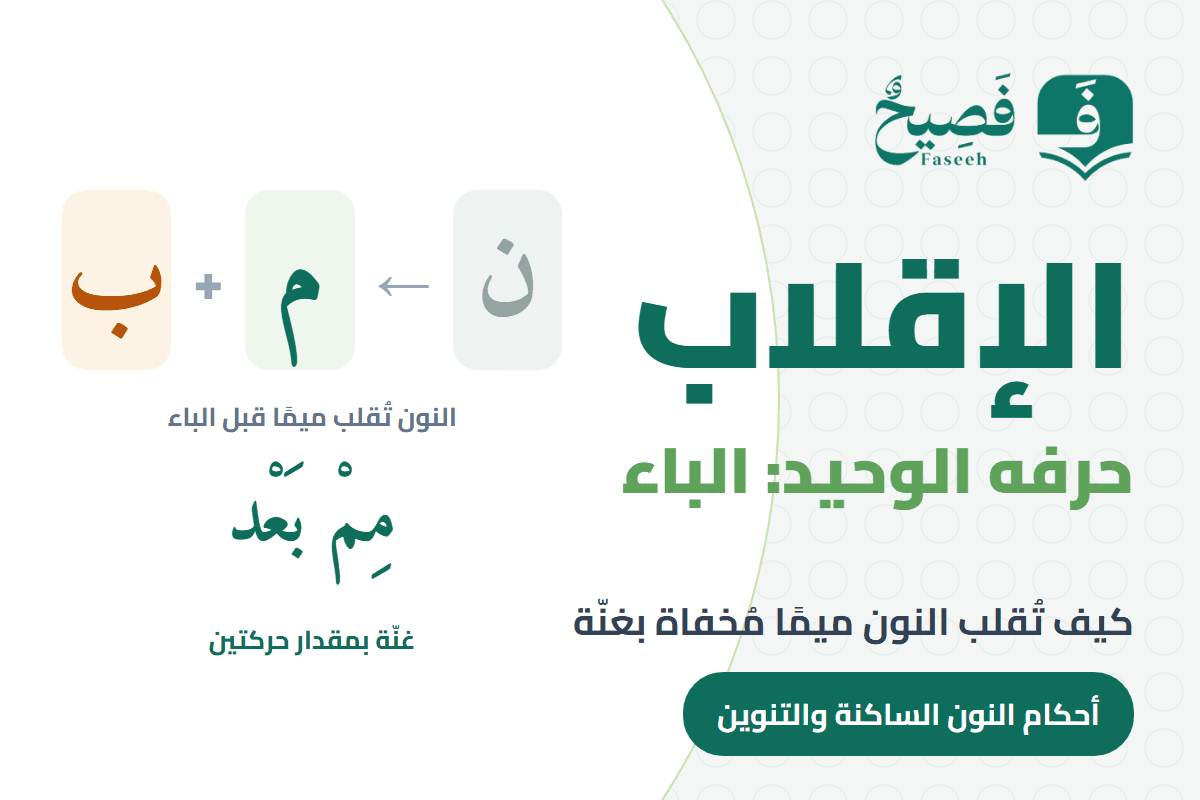
Ikhfa Shafawi vs. Iqlab
Both rules end in almost the same sound: a hidden Meem with Ghunnah before a Ba. The difference is in the original letter:
| Ikhfa Shafawi | Iqlab | |
|---|---|---|
| Original letter | Meem Sakinah | Noon Sakinah or Tanween |
| What happens | The Meem is hidden as it is | The Noon becomes a Meem, then it is hidden |
| Mark | Meem without a sukoon | Small Meem above the Noon or with the Tanween |
| Example | ﴿تَرۡمِيهِم بِحِجَارَةٖ﴾ | ﴿مِنۢ بَعۡدِ﴾ |
For the full explanation of Iqlab, see our Iqlab guide.
Rule 2: Idgham Shafawi (Labial Merging)
Definition: when a Meem Sakinah is followed by a voweled Meem, the first merges into the second and they become one Meem with a shaddah, pronounced with a Ghunnah of two counts.
Other names: it is also called "Idgham Mithlayn Saghir" (minor merging of two identical letters), because both letters are Meem, the first silent and the second voweled.
Mark in the Mushaf: the first Meem has no sukoon, and the second Meem carries a shaddah.
Quran Examples
| Example | Reference |
|---|---|
| ﴿فِي قُلُوبِهِم مَّرَضٞ﴾ (fi qulubihim marad) | Al-Baqarah 2:10 |
| ﴿لَكُم مَّا سَأَلۡتُمۡ﴾ (lakum ma sa'altum) | Al-Baqarah 2:61 |
| ﴿كَم مِّن فِئَةٖ﴾ (kam min fi'ah) | Al-Baqarah 2:249 |
| ﴿وَلَكُم مَّا كَسَبۡتُمۡ﴾ (wa lakum ma kasabtum) | Al-Baqarah 2:134 |
| ﴿وَءَامَنَهُم مِّنۡ خَوۡفِۭ﴾ (wa amanahum min khawf) | Quraysh 106:4 |
How to Pronounce It
Close your lips on one doubled Meem, hold the full Ghunnah for two counts, then open your lips on the vowel of the second Meem. Do not pronounce two separate Meems, and do not drop the Ghunnah.
Every Meem with a shaddah in the Quran is pronounced with a full Ghunnah in the same way, as in ﴿ثُمَّ﴾ and ﴿عَمَّ يَتَسَآءَلُونَ﴾. This belongs to the chapter of the doubled Meem and Noon.
Rule 3: Izhar Shafawi (Labial Clear Pronunciation)
Definition: when a Meem Sakinah is followed by any letter other than Ba and Meem, the Meem must be pronounced clearly from the lips, without a noticeable Ghunnah.
Letters: twenty-six, which are all the letters of the alphabet except Ba, Meem and Alif.
Mark in the Mushaf: a sukoon is written on the Meem.
Quran Examples
| Example | Letter after the Meem | Reference |
|---|---|---|
| ﴿ٱلۡحَمۡدُ لِلَّهِ﴾ (al-hamdu lillah) | Dal (within one word) | Al-Fatihah 1:2 |
| ﴿أَنۡعَمۡتَ عَلَيۡهِمۡ﴾ (an'amta 'alayhim) | Ta (within one word) | Al-Fatihah 1:7 |
| ﴿لَمۡ يَلِدۡ﴾ (lam yalid) | Ya (across two words) | Al-Ikhlas 112:3 |
| ﴿هُمۡ فِيهَا خَٰلِدُونَ﴾ (hum fiha khalidun) | Fa (across two words) | Al-Baqarah 2:25 |
| ﴿عَلَيۡهِمۡ وَلَا ٱلضَّآلِّينَ﴾ ('alayhim wa la ad-dallin) | Waw (across two words) | Al-Fatihah 1:7 |
Take Care Before Waw and Fa
The places where Izhar Shafawi needs the most attention are when the Meem is followed by Waw (و) or Fa (ف). Waw is pronounced with the lips like Meem, and Fa comes from the inner lower lip with the tips of the upper front teeth, so the tongue tends to hide the Meem before them. That is why Al-Jamzuri said:
واحذرْ لدى واوٍ وفا أن تختفي ... لقُربِها والاتّحادِ فاعرِفِ
"Beware of hiding it before Waw and Fa, because of their closeness and shared point of articulation."
So recite ﴿عَلَيۡهِمۡ وَلَا﴾ and ﴿هُمۡ فِيهَا﴾ with a clear silent Meem, then move on to the next letter.
Common Mistakes in the Rules of Meem Sakinah
- Dropping the Ghunnah in Ikhfa Shafawi: reading ﴿وَمَا هُم بِمُؤۡمِنِينَ﴾ with a Meem and then a Ba straight away, with no nasal sound.
- Pressing the lips hard in Ikhfa: this produces a strong, clear Meem, as if it were Izhar.
- Separating the two Meems in Idgham: reading ﴿لَكُم مَّا﴾ as "lakum - ma" with two separate Meems.
- Hiding the Meem before Waw and Fa: the most common Izhar mistake, especially when reading fast.
- Stretching the Ghunnah: holding it for more than two counts until it sounds like a long vowel.
- Adding a Ghunnah in Izhar: lengthening the silent Meem in ﴿ٱلۡحَمۡدُ﴾ as if it were doubled.
Most readers do not notice these mistakes in themselves, because they hear what they intend rather than what they actually say. That is why the rules of Meem are learned from a teacher who listens to you and corrects you on the spot.
Exercises on the Rules of Meem Sakinah
Name the rule of the Meem Sakinah in each example:
- ﴿وَمَا هُم بِمُؤۡمِنِينَ﴾ (Al-Baqarah 2:8)
- ﴿كَم مِّن فِئَةٖ﴾ (Al-Baqarah 2:249)
- ﴿لَمۡ يَلِدۡ﴾ (Al-Ikhlas 112:3)
- ﴿هُمۡ فِيهَا خَٰلِدُونَ﴾ (Al-Baqarah 2:25)
- ﴿وَءَامَنَهُم مِّنۡ خَوۡفِۭ﴾ (Quraysh 106:4)
- ﴿تَرۡمِيهِم بِحِجَارَةٖ﴾ (Al-Fil 105:4)
Answers:
- Ikhfa Shafawi: the Meem of "hum" is followed by Ba.
- Idgham Shafawi: the Meem of "kam" is followed by Meem.
- Izhar Shafawi: the Meem of "lam" is followed by Ya.
- Izhar Shafawi: the Meem of "hum" is followed by Fa, one of the places where hiding the Meem is a common mistake.
- Idgham Shafawi: the Meem of "amanahum" is followed by Meem.
- Ikhfa Shafawi: the Meem of "tarmihim" is followed by Ba.
Frequently Asked Questions
How many rules does Meem Sakinah have? Three: Ikhfa Shafawi, Idgham Shafawi and Izhar Shafawi.
What is the letter of Ikhfa Shafawi? Only one letter: Ba (ب).
What is the difference between Idgham Shafawi and Idgham Mithlayn? There is no difference. They are two names for the same rule: Idgham Shafawi is the minor merging of two identical letters, applied to Meem.
Is there a Ghunnah in Izhar Shafawi? No noticeable Ghunnah. The Meem is pronounced silent and clear from the lips, then you move to the next letter.
How can I tell the rule from the Mushaf? A Meem with a sukoon is Izhar. A bare Meem without a sukoon is Ikhfa if a Ba follows it, and Idgham if a doubled Meem follows it.
How are the rules of Meem different from the rules of Noon? Noon Sakinah and Tanween have four rules, with fifteen letters of Ikhfa. Meem Sakinah has only three rules, and Ikhfa and Idgham each have a single letter.
Learn the Rules of Meem with a Teacher at Faseeh
The rules of Meem Sakinah take minutes to memorize, but mastering them needs someone listening. At Faseeh you recite live with a male or female teacher who listens to your Ghunnah and your clear Meem and corrects them immediately, and after every session you receive a report of what you mastered and what needs review.
Start with Tajweed for beginners, or see Faseeh plans and book your first session free.