The Difference Between Short Vowels and Madd in recitation with practical examples.
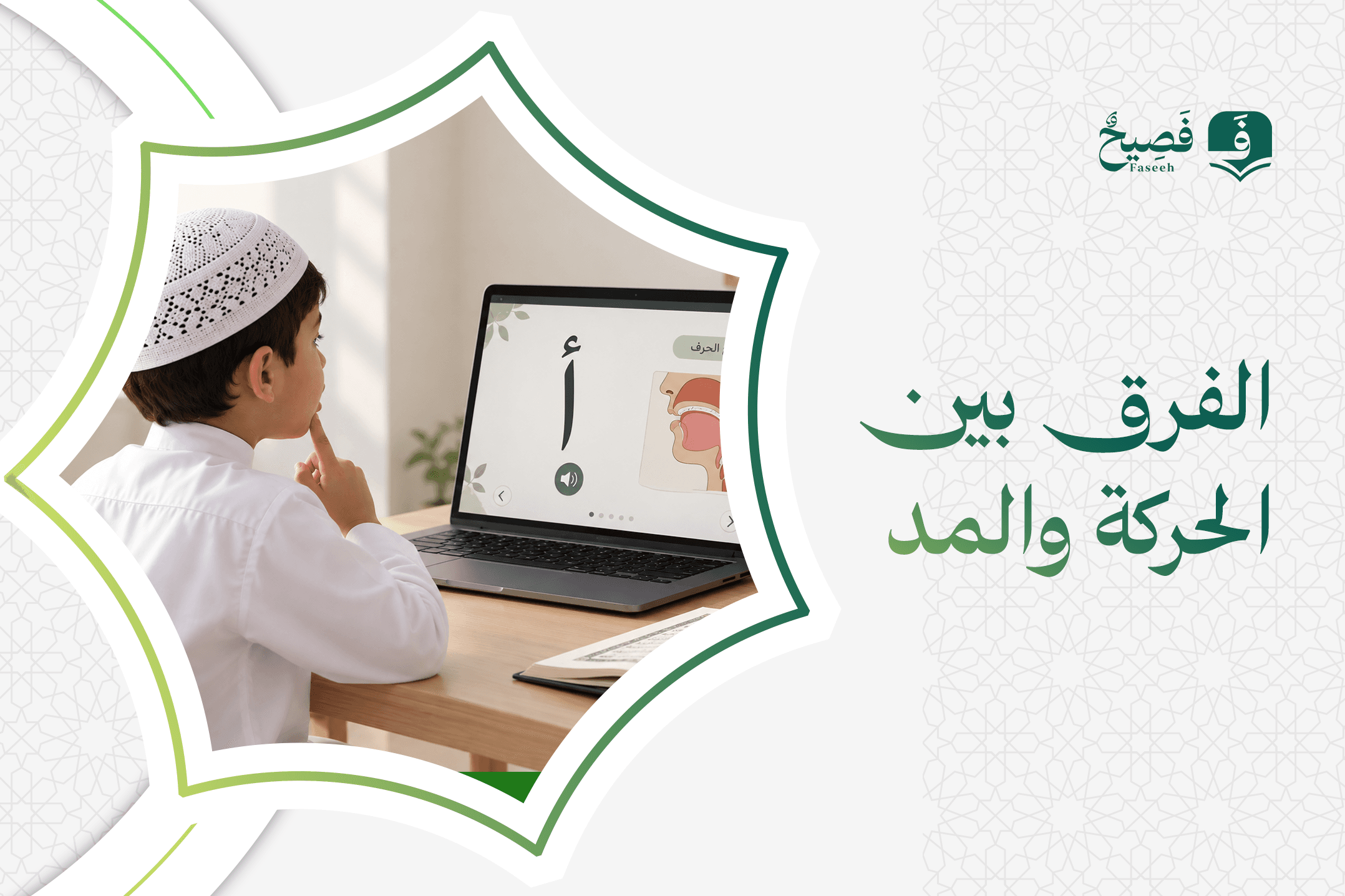
A learner may sometimes read a letter with a short vowel and extend its sound until it becomes a madd (elongation), or shorten a madd letter until it sounds like a short vowel. This usually happens because the difference between short vowels and madd is not clear in terms of pronunciation duration, spelling, and the role of each one within the word.
A short vowel is a brief sound that accompanies a letter, while madd is a longer sound produced by one of the three madd letters. Therefore, there is a clear difference between بَ (ba) and بَا (baa), بُ (bu) and بُو (boo), and بِ (bi) and بِي (bee).
Understanding this difference is essential for learning Arabic and reading the Quran correctly, as extending a short vowel or shortening a madd can change the structure and meaning of words.
What Is the Difference Between Short Vowels and Madd?
A short vowel is a brief sound that appears on a letter through fatha, damma, or kasra, such as:
- كَ
- كُ
- كِ
Madd, however, is the extension of the sound through one of the three madd letters:
- Alif (ا)
- Waw (و)
- Ya (ي)
Examples:
- كَا
- كُو
- كِي
Each short vowel is connected to a suitable madd letter:
- Fatha is followed by madd with Alif.
- Damma is followed by madd with Waw.
- Kasra is followed by madd with Ya.
If the sound ends quickly, it is a short vowel. If it continues with the presence of a madd letter, it becomes elongation.
Listen to the Difference in Pronunciation
The difference can be understood through the following examples:
-
بَ – بَا:
The first is a short fatha, while the second is an elongated sound with Alif. -
بُ – بُو:
The first is a short damma, while the second is an elongated sound with Waw. -
بِ – بِي:
The first is a short kasra, while the second is an elongated sound with Ya.
The difference is not related to the loudness or strength of the voice, but rather to the duration of the sound and the existence of the madd letter in the word.
What Are Short Vowels?
Short vowels are:
- Fatha
- Damma
- Kasra
They are written as marks around the letter and are not independent letters.
Fatha
Fatha is written above the letter (ـَ), and it is pronounced with an open mouth, such as:
- سَ
- ذَهَبَ
- فَتَحَ
Damma
Damma is written above the letter (ـُ), and it is pronounced with rounded lips, such as:
- سُ
- كُتُب
- رُسُل
Kasra
Kasra is written below the letter (ـِ), and it is pronounced with a lowered jaw position, such as:
- سِ
- كِتَاب
- حِسَاب
When a kasra is followed by a silent Ya, the sound becomes extended:
- قِ → قِي
- رِ → رِي
- قِيلَ
- كَرِيمٌ
This relationship helps learners read new syllables instead of memorizing every word separately.
What Are the Conditions of Madd Letters?
Not every Alif, Waw, or Ya inside a word is considered a madd letter. Specific conditions must be fulfilled.
Alif as a Madd Letter
The Alif becomes a madd letter when it is silent and preceded by a letter with a fatha.
Examples:
- قَالَ
- بَابٌ
The Alif is always silent and does not carry a vowel.
Waw as a Madd Letter
The Waw becomes a madd letter when it is silent and preceded by a letter with a damma.
Examples:
- يَقُولُ
- نُورٌ
However, the Waw in وَلَد is a moving letter, and the Waw in خَوْف is considered a letter of leen because it is preceded by a fatha.
Ya as a Madd Letter
The Ya becomes a madd letter when it is silent and preceded by a letter with a kasra.
Examples:
- فِي
- قِيلَ
- رَحِيمٌ
However, the Ya in يَد is a moving letter, and the Ya in بَيْت is a letter of leen.
Understanding Points of Articulation in Tajweed helps learners control the position of the mouth and tongue while pronouncing short vowels and madd letters.
A Short Vowel Is a Mark, While Madd Is a Letter
The difference between short vowels and madd also appears in writing:
- بَ: A letter with fatha.
- بَا: A letter with fatha followed by a madd Alif.
- بُ: A letter with damma.
- بُو: A letter with damma followed by a madd Waw.
- بِ: A letter with kasra.
- بِي: A letter with kasra followed by a madd Ya.
A short vowel is a mark that controls the sound of the letter, while madd includes a written letter that becomes part of the word structure.
Some Alifs may appear in the Mushaf as small Alifs, so the reader needs to understand the signs used in Quranic writing.
The Duration of Short Vowels and Natural Madd
A short vowel is pronounced with a brief sound duration, while natural madd is extended for two counts.
The concept of “counts” does not mean a fixed number of seconds, because pronunciation speed differs between readers. However, the relative difference between the short sound and the extended sound must remain clear.
A simple explanation for beginners:
- بَ → short sound.
- بَا → longer sound equal to two counts.
A short vowel should not be stretched, because extending it may create a madd letter that does not exist in the word.
How Does a Short Sound Become Madd?
A sound becomes elongated when a suitable madd letter comes after a letter carrying the matching vowel.
Madd with Alif
When a silent Alif comes after a letter with fatha, the fatha sound becomes longer:
Examples:
- قَ → قَا
- كَ → كَا
- قَالَ
- كَانَ
Madd with Waw
When a silent Waw comes after a letter with damma, the damma sound becomes longer:
Examples:
- قُ → قُو
- نُ → نُو
- يَقُولُ
- نُورٌ
Madd with Ya
When a silent Ya comes after a letter with kasra, the kasra sound becomes longer:
Examples:
- بِ → بِي
- رِ → رِي
- قِيلَ
The learner should not depend only on counting; listening and practicing with a qualified teacher are necessary to master sound duration.
Why Is It Important to Distinguish Between Short Vowels and Madd?
Removing or adding madd can change the word and its meaning.
Examples:
- عَلِمَ and عَالِم
- قَتَلَ and قَاتَلَ
- جَمَل and جَمَال
- مَلَك and مَالِك
If the reader shortens the madd in قَالَ, its pronunciation may become close to قَلَ. Likewise, extending a vowel that is not followed by a madd letter adds an incorrect sound to the word.
Common Pronunciation Mistakes
Some signs that a learner is extending short vowels include:
- Hearing an Alif after every fatha.
- Adding a Waw sound after every damma.
- Adding a Ya sound after every kasra.
- Not having a clear difference between short vowels and madd.
- Reading slowly because all sounds are being extended.
On the other hand, shortening madd appears when:
- قَالَ is pronounced like قَلَ.
- The Waw sound disappears from يَقُولُ.
- The Ya sound disappears from قِيلَ.
Practical Exercise to Master the Difference
To strengthen understanding:
- Choose a letter such as Baa (ب).
- Read it with short vowels:
- بَ
- بُ
- بِ
- Read it with madd:
- بَا
- بُو
- بِي
- Move between each short vowel and its matching madd.
- Record your voice and listen carefully.
- Practice with short words.
- Read in front of a teacher to receive direct correction.
Learn Short Vowels and Madd with Faseeh
The learning experience at Faseeh Platform begins with evaluating pronunciation skills, articulation points, auditory recognition, visual recognition, and basic reading abilities.
Based on the evaluation results, the learner’s needs are identified, whether they require training in short vowels, practice with madd letters, or progression to a higher level through Faseeh Educational Programs.
Learners can also benefit from the Faseeh Educational Foundation Program (Reading and Spelling Track) to build strong foundations in Arabic letters, sounds, and reading skills.
The Rule of Two Consecutive Sukoon and Its Relation to Reading
Understanding vowel sounds and madd helps learners apply Quranic reading rules correctly, including cases where pronunciation changes due to consecutive silent letters.
You can learn more about the Rule of Two Consecutive Sukoon and how it affects correct Quranic pronunciation.
The Role of Teaching Arabic Letters in Mastering Sounds
For children and beginners, understanding Arabic letters is the first step toward distinguishing between short vowels and madd.
The learner should first recognize the shape of the letter, its sound, and its movement before moving to longer sounds.
Learn more about Teaching Arabic Alphabet to Children and how proper foundation helps children develop accurate reading skills.
Adjust Your Voice Timing
A short vowel is a brief sound, while madd is a longer sound that depends on the presence of a suitable madd letter.
Mastering the difference requires understanding the rule, listening carefully, and practicing regularly.
Book your evaluation session with Faseeh Platform and discover the suitable learning path to improve your Arabic reading and Quran recitation skills.
For more information about available plans, explore Faseeh Pricing Packages and choose the program that matches your learning goals.