Principles of the Science of Recitations: Your Guide to Understanding the Foundations of the Quranic Recitations.

The science of Quranic recitations (Ilm Al-Qira’at) is considered one of the most noble sciences related to the Holy Quran. It is the science through which Allah preserved the correct ways of reciting His Book as it was revealed to Prophet Muhammad ﷺ, and it was transmitted by scholars through a continuous chain of narration from generation to generation.
Many students of knowledge and Quran enthusiasts search for the principles of Quranic recitations to understand this science before going deeper into its study and to learn about its important terms, objectives, and famous scholars.
In this article, we will explain the principles of Quranic recitations in a simple way suitable for beginners, highlighting its importance, the difference between Qira’ah (recitation), Riwayah (narration), and Tariq (method), and how you can begin your journey in Quranic sciences with Faseeh Educational Platform.
What Is the Science of Quranic Recitations?
The science of Quranic recitations is the knowledge through which we learn the different ways of pronouncing the words of the Holy Quran, including the agreed and differing methods of performance, while attributing each method to its authentic transmitter through a valid chain of narration.
Imam Ibn Al-Jazari defined it as:
“Knowledge of the method of performing the words of the Quran and their differences by attributing them to their transmitters.”
The differences between Quranic recitations do not mean that there are contradictions in the Quran. Rather, they are authentic variations confirmed from Prophet Muhammad ﷺ, transmitted by trustworthy reciters through continuous transmission, and all are revelations from Allah Almighty.
What Are the Principles of Quranic Recitations?
The principles of Quranic recitations refer to the basic concepts that every student should understand before studying this field. They include:
| Element | Explanation |
|---|---|
| Definition | A science that explains how Quranic words are performed and the authentic ways of reciting them |
| Subject | Quranic words in terms of pronunciation and performance |
| Benefit | Mastering Quran recitation, avoiding mistakes, and preserving the Quranic performance as revealed |
| Virtue | One of the most honorable Islamic sciences because it is connected to the Book of Allah |
| Sources | The Quran, Sunnah, and authentic continuous narrations from Prophet Muhammad ﷺ |
| Founder | Received by companions from the Prophet ﷺ, then documented by scholars of Quranic recitations |
| Name | The Science of Quranic Recitations |
| Ruling of Learning It | A communal obligation, and recommended for Quran students to learn and master |
| Main Topics | Principles of recitations, letter variations, stopping and starting rules, elongation, and different methods of performance |
Why Is the Science of Quranic Recitations Important?
The importance of Quranic recitations lies in preserving the method of Quran recitation as transmitted by the companions from Prophet Muhammad ﷺ and preventing mistakes or changes in pronunciation.
Its main benefits include:
- Preserving the words of the Holy Quran.
- Mastering correct pronunciation of letters.
- Understanding authentic Quranic recitation variations.
- Increasing reflection on Quran meanings.
- Connecting to the continuous chain of transmission reaching Prophet Muhammad ﷺ.
- Discovering the linguistic and rhetorical miracles of the Quran.
Therefore, scholars considered Quranic recitations one of the greatest Islamic sciences because it is connected to the greatest Book revealed by Allah.
How Did the Science of Quranic Recitations Begin?
The science of Quranic recitations began with the revelation of the Quran. Prophet Muhammad ﷺ received revelation from Angel Jibreel and then taught it to his companions exactly as it was revealed.
After Islam spread across different regions, the followers learned the Quran directly from the companions. Later, scholars began documenting this science, establishing its principles, and preserving it through authentic chains of narration.
Throughout history, Muslims gave great attention to this science, and many great recitation scholars emerged who preserved the correct methods of Quran performance.
Who Are the Ten Famous Quran Reciters?
Ten major scholars became famous for transmitting the authentic Quranic recitations:
| Imam | Famous Narrations |
|---|---|
| Nafi’ Al-Madani | Qalun – Warsh |
| Ibn Kathir Al-Makki | Al-Bazzi – Qunbul |
| Abu Amr Al-Basri | Al-Duri – Al-Susi |
| Ibn Amir Ash-Shami | Hisham – Ibn Dhakwan |
| Asim Al-Kufi | Hafs – Shu’bah |
| Hamzah Al-Kufi | Khalaf – Khallad |
| Al-Kisai | Abu Al-Harith – Al-Duri |
| Abu Jaafar Al-Madani | Ibn Wardan – Ibn Jammaz |
| Yaqub Al-Hadrami | Ruways – Rawh |
| Khalaf Al-Ashir | Ishaq – Idris |
All these recitations are authentic and transmitted through approved chains of narration among Quran scholars.
What Is the Difference Between Qira’ah, Riwayah, and Tariq?
One of the most common questions among beginners is understanding the difference between these terms.
Qira’ah (Recitation)
It refers to a Quranic recitation attributed to one of the ten Imams, such as the recitation of Imam Asim or Imam Nafi’.
Riwayah (Narration)
It refers to what a narrator transmitted from the Imam, such as Hafs’ narration from Asim or Warsh’s narration from Nafi’.
Tariq (Method)
It refers to what was transmitted from the narrator through one of his students and focuses on detailed aspects of Quranic performance.
Understanding these terms helps students study Quranic recitation books correctly.
What Is the Difference Between Tajweed and Quranic Recitations?
Some beginners may confuse these two sciences, but there is a clear difference between them.
Tajweed Science
It focuses on:
- Rules of letter pronunciation and Quran recitation.
- Correcting Quran reading.
- Applying pronunciation rules.
Therefore, it is recommended to start with programs such as Teaching Tajweed for Beginners before moving into advanced Quranic recitation studies.
Quranic Recitations Science
It focuses on:
- Different authentic recitation methods transmitted from Quran scholars.
- The various ways of performing Quranic words.
- The authentic forms of Quran recitation.
Famous Books in Quranic Recitations
Scholars wrote many books that became major references in this science, including:
- An-Nashr fi Al-Qira’at Al-Ashr by Ibn Al-Jazari.
- At-Taysir fi Al-Qira’at As-Sab’ by Abu Amr Ad-Dani.
- Hirz Al-Amani (Ash-Shatibiyyah) by Imam Ash-Shatibi.
- Tayyibat An-Nashr by Ibn Al-Jazari.
These books continue to be taught in Islamic institutions and Quran learning circles today.
How Do You Start Learning Quranic Recitations?
If you want to study this science, it is best to follow gradual steps:
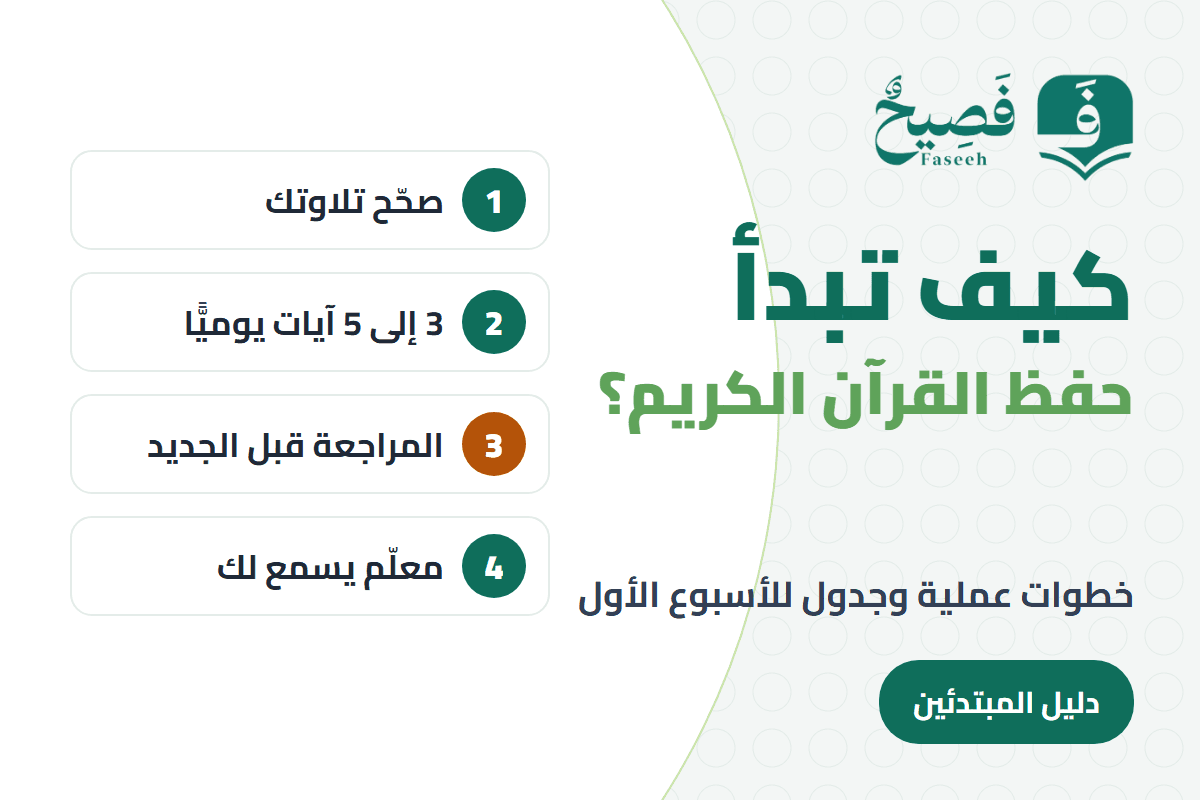
- Learn correct Quran reading.
- Master letter articulation points and characteristics.
- Study Tajweed rules.
- Memorize a suitable portion of the Quran.
- Read to a qualified teacher with an authentic chain.
- Gradually study Quranic recitation principles and narrations.
Quranic recitations depend greatly on direct learning and oral transmission, not only theoretical study.
Learn the Ten Quranic Recitations with Faseeh Educational Platform
After mastering Quran reading and Tajweed basics, students can move to advanced levels through Learn the Ten Quranic Recitations Online.
Faseeh Educational Platform provides a specialized pathway that helps learners study the Ten Quranic Recitations through a structured methodology under the supervision of qualified Quran teachers.
How Does Faseeh Educational Platform Help You Learn Quranic Sciences?
If you are beginning your journey with the Quran, Faseeh Educational Platform provides educational programs suitable for different ages and levels.
Students can start with foundational reading programs and then move to the Quran Memorization and Tajweed Program, which helps them master recitation and memorize the Quran gradually from beginner level to advanced certification under specialized Quran teachers.
You can also explore suitable options through Explore Faseeh Packages.
Frequently Asked Questions
What Is Meant by the Science of Quranic Recitations?
It is the science that explains the methods of performing Quranic words according to authentic recitations transmitted from Prophet Muhammad ﷺ.
Are Quranic Recitations Different from Narrations?
Yes. A recitation is attributed to the Quran Imam, while a narration is attributed to the narrator who transmitted that recitation.
Is Learning Quranic Recitations Obligatory?
Learning this science is a communal obligation. Those who specialize in teaching Quran and granting recitation certifications should master it under qualified scholars.
Can Quranic Recitations Be Studied Before Tajweed?
It is recommended to first master Tajweed and correct Quran reading before moving to the science of Quranic recitations.
Start Your Journey with the Holy Quran
If you want to learn correct Quran reading, master Tajweed, or gradually study Quranic sciences, Faseeh Educational Platform provides specialized programs supervised by qualified teachers, starting from reading foundations until mastering Quran recitation and advanced studies.
Contact us today through WhatsApp, and the Faseeh team will help you choose the most suitable program for your level and answer all your questions, allowing you to begin your journey with the Book of Allah with confidence and excellence.